
Google’s March 2026 Update: What Changed and What to Do Next
Something big happened in late March 2026.
If you run a website, a blog, a business site, an online store, anything really and your traffic dropped around March 27, then this article is for you. Google rolled out its biggest update of the year, and honestly, a lot of websites never saw it coming.
So what actually happened?
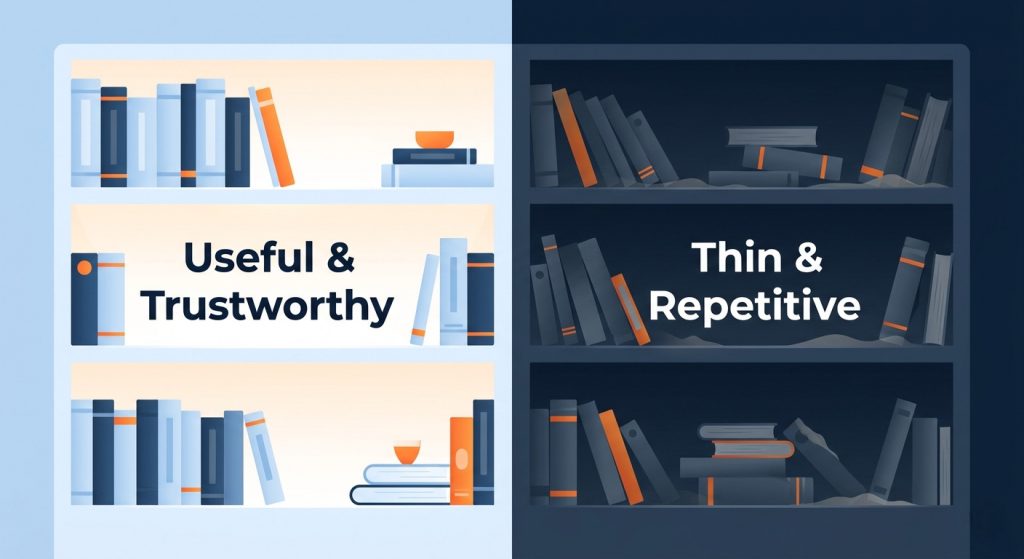
Think of Google like a librarian.
Every few months, that librarian rearranges all the books. The useful, trusted, well-written ones move to the front, while the repetitive, vague ones get pushed to the back. That’s a core update, not a punishment, just a reshuffle.
This one started March 27 and finished April 8, just 12 days. But the impact was huge. Over half of all websites shifted in rankings, and nearly 80% of websites sitting in Google’s top three results moved positions. So if your site dropped overnight, you were far from alone.
Why was this one so disruptive?
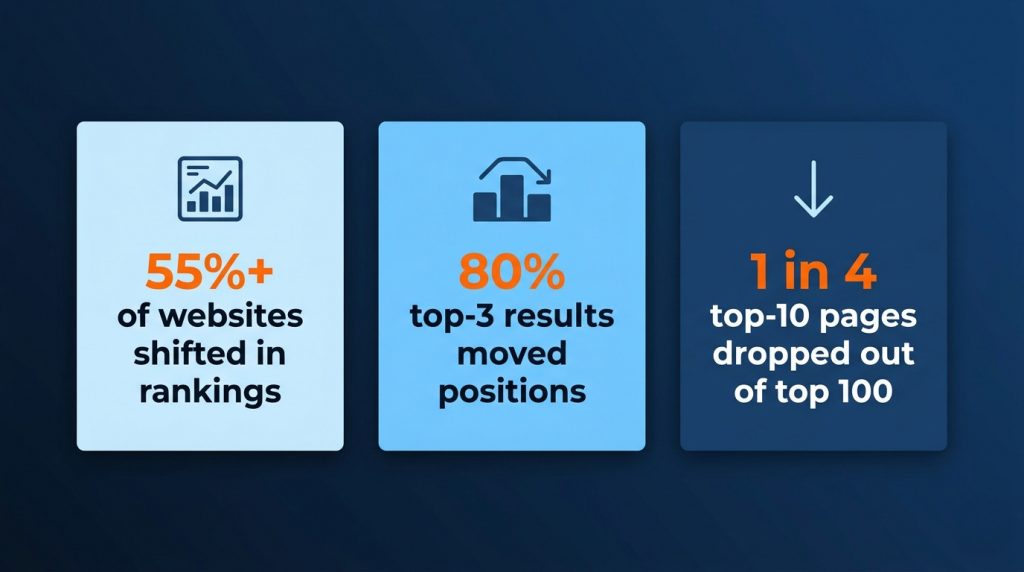
Put simply, Google raised the bar. And this update was the moment that bar came down hard on anyone who hadn’t kept up.
Here’s what got hit hardest:
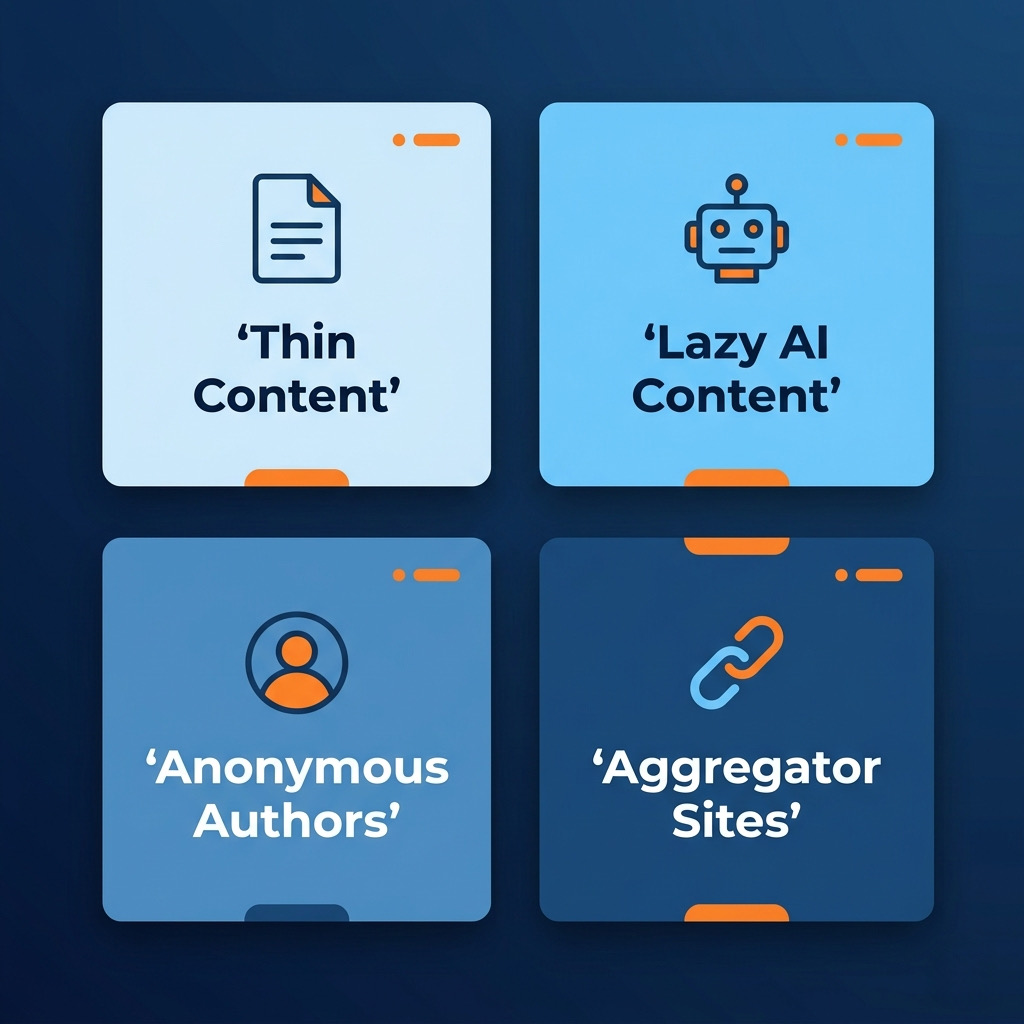
1. Content that sounds useful but says nothing
You know those articles that seem detailed but leave you knowing nothing new? Well, Google has gotten very good at spotting them. If your content just repeats what ten other websites already say, without any fresh ideas or real experience, it will struggle to rank. Google is basically asking: if this page disappeared tomorrow, would anyone miss it? Because if the answer is no, that’s now a ranking problem.
2. AI content with no human behind it
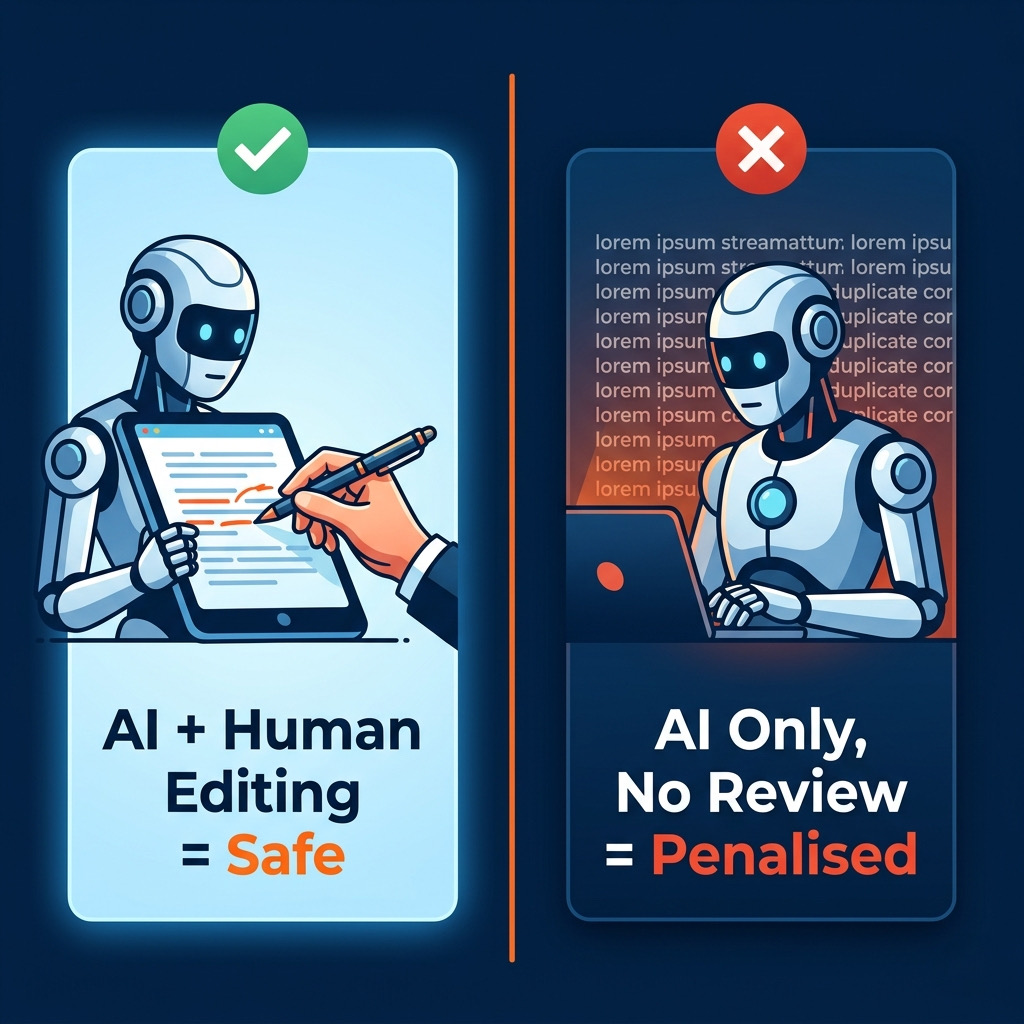
This is a big one. Importantly, this update did not ban AI content at all. Instead, it went after lazy AI content, the kind pumped out in bulk, published without anyone checking it or adding real knowledge. Businesses using AI as a helper, where a real person still edits and adds their own expertise, came out just fine. However, businesses using AI as a full replacement for human thinking took serious hits.
3. Anonymous content no one can check
Would you trust advice from someone with no name and no background? Neither does Google. As a result, pages with no named author, or a vague, empty profile — started losing ground fast. Because trust matters, Google wants to see a real, qualified person behind the content it shows people.
4. Sites that just send you somewhere else
Review sites, job boards, price comparison tools, listing directories — basically any site that collects other people’s content without adding anything new, lost a lot of ground. In that case, better SEO alone won’t fix it. A genuinely better, more useful product is the only real answer.
What should you do now?
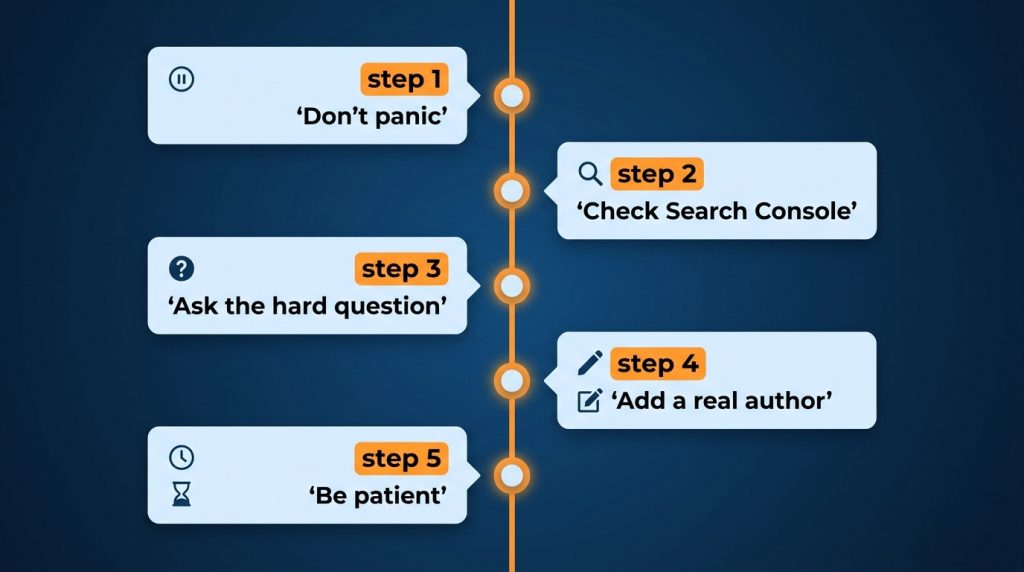
1. First, don’t panic and start deleting pages
Rushing to delete or rewrite everything right after an update usually does more harm than good. So instead, take a breath, look at your data, and then make calm, smart decisions.
2. Next, open your Google Search Console
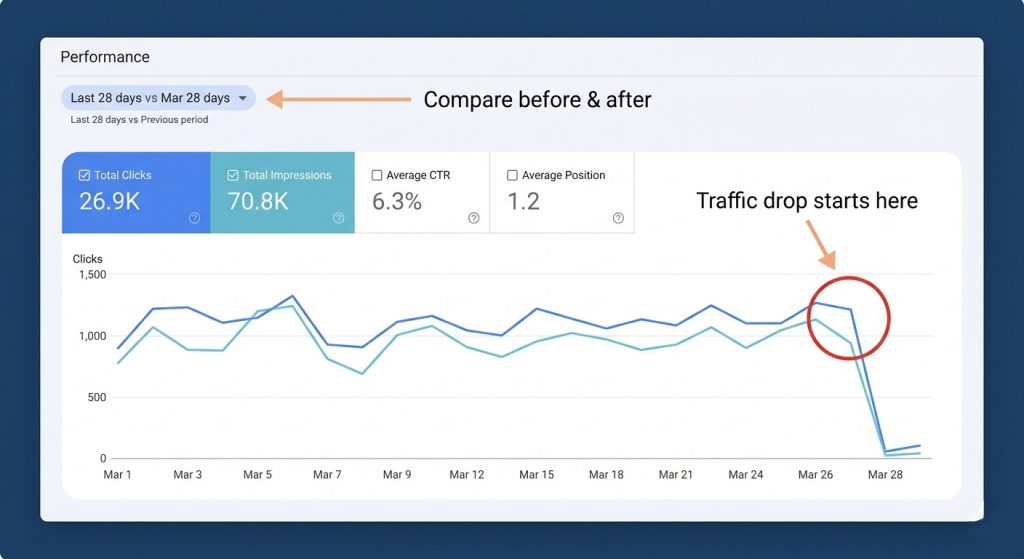
Compare your traffic from March 27 onwards against the four weeks before that. See which pages dropped and which ones held steady, because that data tells you exactly where to focus first.
3. Then ask yourself the honest question
For every page that lost traffic, ask: does this page say anything that people can’t already find somewhere else? If not, that’s your answer. Add real experience, original research, or a point of view that only your business can offer.
4. Also, put a real name on your content
Add a named, credible author to your key pages, a short bio, a photo, a LinkedIn link. Not only does it build trust with your readers, but it also signals to Google that a real expert is behind those words.
5. Finally, be patient
Recovery from a core update rarely happens straight away. It usually comes with the next update, not the day after you make changes. So keep improving steadily, and let Google catch up over time.
The bottom line: simple always wins
The sites doing well right now aren’t doing anything fancy or complicated. They’re simply publishing content that’s honest, clear, and genuinely useful, the kind a real person actually wants to read.
That’s the new standard. And truthfully, it was always the right one.
To stay updated on the latest in digital technology and practical insights, visit Cleuz Blog and explore more resources for forward-looking development.