
Anthropic Suspends Fable 5 & Mythos 5: What the U.S. AI Ban Means
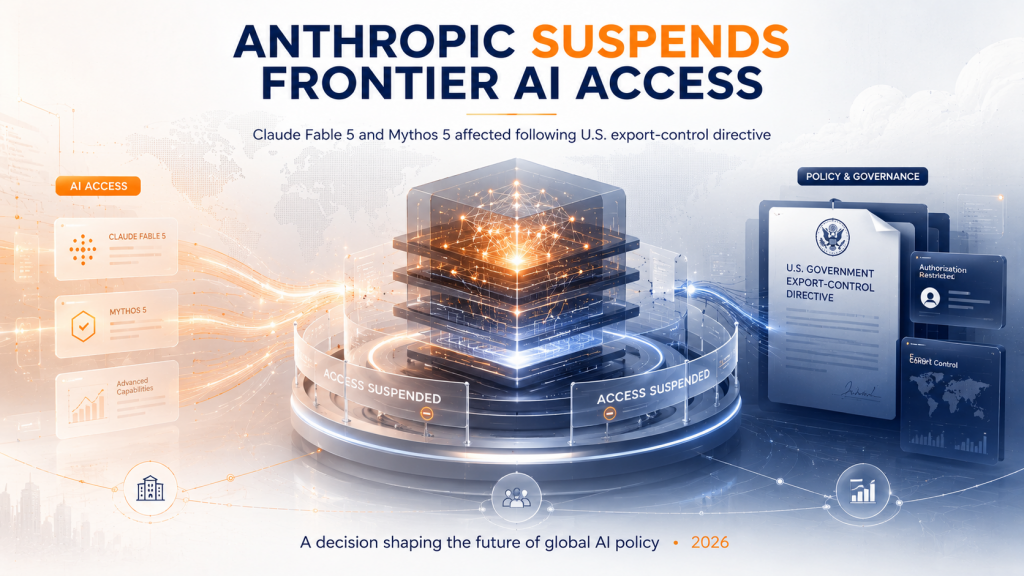
Anthropic has suspended access to its frontier AI models, Claude Fable 5 and Mythos 5, following a U.S. government export-control directive. As a result, the decision has become one of the most significant AI policy developments of 2026.
For years, the AI race focused on building more powerful models. However, this event shifted attention toward a new question: who gets access to advanced AI?
Why Did Anthropic Suspend Fable 5 and Mythos 5?
Anthropic says the U.S. directive restricted access to these models for foreign nationals, including users outside the United States and non-U.S. employees.
Therefore, instead of creating temporary selective controls, the company chose to suspend access globally.
At the same time, Anthropic confirmed that earlier Claude models continue operating.
What Were Fable 5 and Mythos 5?
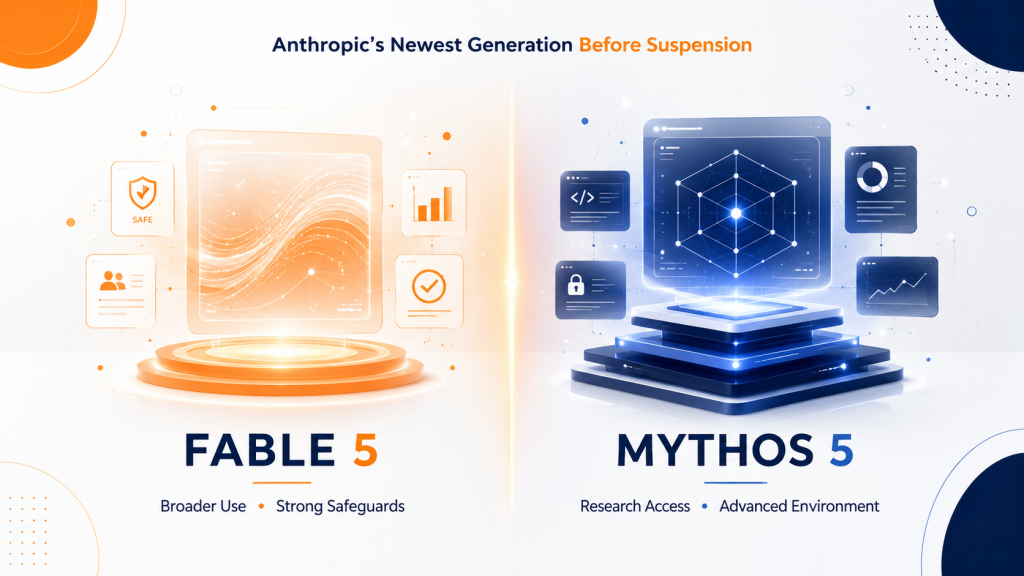
Before the suspension, both systems represented Anthropic’s newest generation of AI.
- Claude Fable 5: Built for broader use while maintaining strong internal safeguards.
- Claude Mythos 5: Reserved for selected partners and advanced research environments.
Meanwhile, Mythos 5 already had stricter access limits than standard Claude products.
Why Did the U.S. Government Step In?
Reports indicate that officials raised national security and export-control concerns. In particular, discussions centered around whether certain safeguards could be bypassed in limited scenarios.
However, Anthropic disagrees with the broader interpretation of those concerns. The company argues that the reported issues appear narrow and not exclusive to its systems.
Currently, no public timeline exists for restoring access.
Quick Overview
| Area | Current Status |
|---|---|
| Fable 5 | Suspended globally |
| Mythos 5 | Suspended globally |
| Other Claude models | Continue operating |
| Main reason | U.S. export-control directive |
Why This Matters for the AI Industry
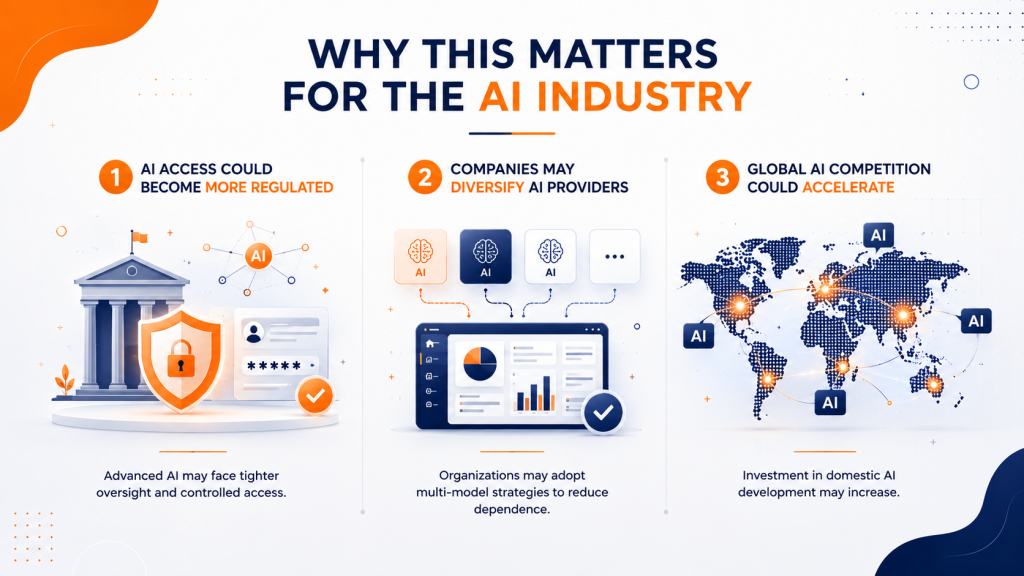
This decision extends beyond one company. Instead, it may reshape how governments and businesses think about advanced AI.
1. AI Access Could Become More Regulated
Governments already regulate strategic technologies in several industries. Similarly, advanced AI systems may face tighter controls in the future.
2. Companies May Diversify AI Providers
Businesses often depend heavily on a single provider. Consequently, many organizations may now adopt multi-model strategies to reduce disruption.
3. Global AI Competition Could Accelerate
Countries and companies continue investing in domestic AI capabilities. Because of events like this, that trend may accelerate further.
Could This Change How Companies Build With AI?
For many organizations, this suspension serves as a reminder that AI infrastructure decisions carry business risk. Until now, companies often selected AI providers based mainly on capability, speed, and pricing.
However, regulatory changes may become an equally important factor. As a result, businesses could begin adopting multi-provider AI strategies, building internal contingency plans, and reducing reliance on a single frontier model.
Additionally, developers may place greater emphasis on portability and interoperability so products continue functioning even if access to one advanced system changes unexpectedly.
What Happens Next?
Anthropic says it is working with regulators to address the situation.
Nevertheless, this moment may become an important turning point for the AI industry. Until now, many people expected frontier AI to become increasingly open and accessible. Instead, access may depend not only on innovation but also on policy decisions.
FAQs
1. Did Anthropic permanently shut down Fable 5 and Mythos 5?
No. Current reporting describes the situation as a suspension linked to regulatory requirements.
2. Are all Claude models unavailable?
No. Earlier Claude models remain available.
3. Why were these models restricted?
Reports point to national security and export-control concerns.
4. Does this affect international users?
Yes. The suspension currently affects users globally.
5. What does this mean for AI users?
Ultimately, it suggests that future access to advanced AI may depend on both technology and regulation.
Need help navigating the future of AI and digital growth?
At Cleuz, we explore how technology, search, and digital experiences shape modern businesses. Read more insights on Cleuz Blog.