
Video SEO in 2026: Why Video Is Becoming the New Search Engine
Video Is Becoming the New Search Engine
People don’t just Google things anymore. They watch them.
In 2026, video has quietly become one of the most powerful search tools available — and most brands are still treating it like a marketing add-on. If you’re a business, agency, or financial institution wondering where organic visibility is heading, the answer is increasingly: video-first.
Search Has Changed
Google’s AI Overviews now pull directly from video transcripts. YouTube processes over 14 billion searches per month. TikTok has become the go-to search engine for Gen Z. And voice assistants are summarizing video content in real time.
This isn’t a trend. It’s a structural shift in how people find information and it’s happening faster than most marketing teams are prepared for.
Video SEO, the practice of optimizing video content for discoverability — is no longer optional. It’s a core part of any serious search strategy in 2026.
Why Video Ranks Differently Now
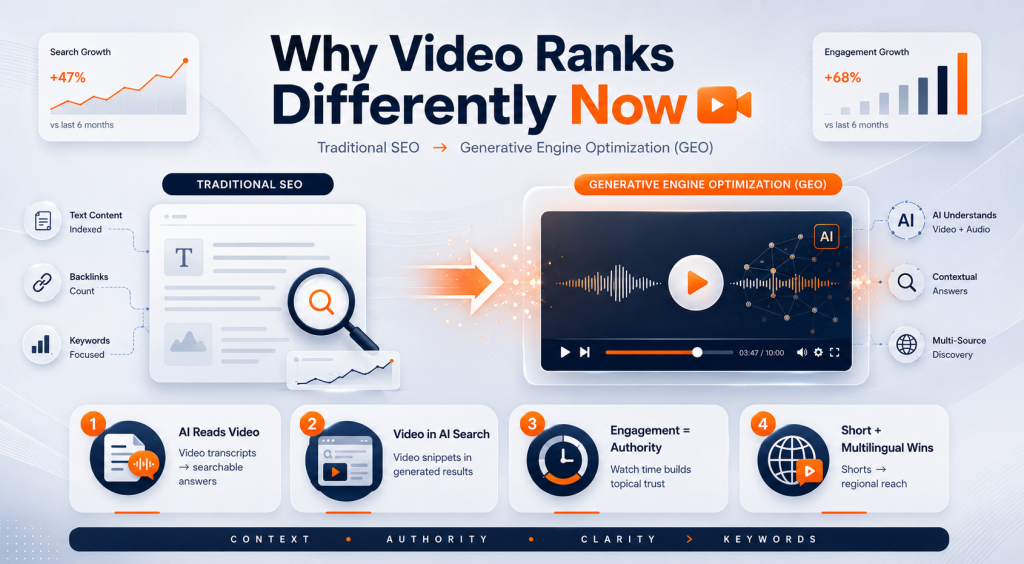
Traditional SEO rewards text. But Generative Engine Optimization (GEO) rewards context, authority, and clarity — which video delivers naturally.
Here’s what’s changed:
- AI search engines index video transcripts and surface spoken content as featured answers
- Google’s SGE regularly includes video snippets in its generated responses
- Watch time and engagement now signal topical authority, not just backlinks
- Short-form video (Reels, Shorts, TikToks) now appears in Google’s main search results
- Multilingual video content is being indexed and served across regional search queries more than ever before
In short: if your content isn’t in video format, you’re invisible in a growing slice of search real estate.
What Video SEO Actually Looks Like in 2026
| Element | What to Optimize |
|---|---|
| Title | Include primary keyword naturally — match search intent |
| Description | First 2–3 lines matter most; add timestamps + links |
| Transcript | Upload a clean, accurate transcript for AI indexing |
| Thumbnail | High contrast, readable text, human face when possible |
| Chapters | Structured chapters help AI pull specific answers |
| Platform | YouTube for long-form; Shorts/Reels for discovery |
Getting these right is what separates videos that rank from videos that disappear into the void.
The GEO Angle: Why AI Search Loves Video
Generative engines don’t just read — they synthesize. And video gives them richer, more layered material to work with.
When you upload a well-structured explainer video with a clean transcript, accurate metadata, and a strong hook in the first 30 seconds, AI search engines can extract, summarize, and cite your content in response to user queries.
For banks, cooperative institutions, and financial service brands, this is a significant and largely untapped opportunity. Educational video content (how-tos, explainers, product walkthroughs, regulatory updates) aligns perfectly with the high-intent search queries that AI engines now answer visually and conversationally.
The brands getting this right aren’t just ranking, they’re being quoted by AI.
Three Things You Should Do Right Now
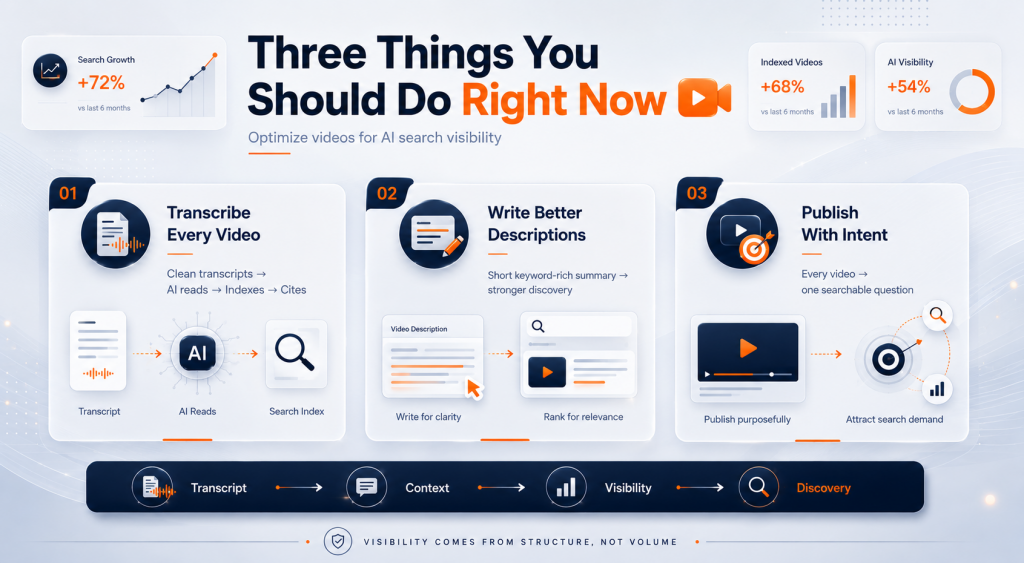
1. Transcribe every video you publish. Clean transcripts are how AI engines read your video. No transcript = no indexing, no citations, no visibility.
2. Treat your video description like a blog intro. Don’t waste it on generic copy. Write it like a short, keyword-rich summary of what the viewer will learn and why it matters.
3. Build a YouTube presence with intent. Don’t just post — publish. Every video should target a specific question your audience is actively searching for.
FAQs
Q1. What is Video SEO?
It’s the practice of optimizing video content so it ranks on search engines like Google and YouTube.
Q2. Does video rank on Google in 2026?
Yes — Google’s AI Overviews, featured snippets, and main results all increasingly surface video content.
Q3. What platforms matter most for video SEO?
YouTube remains dominant, but Google Shorts, Instagram Reels, and LinkedIn Video are all gaining search visibility.
Q4. Is video SEO relevant for financial institutions?
Absolutely. Educational and explainer videos perform exceptionally well for high-intent finance queries.
Q5. How long should a video be for SEO?
It depends on intent. Explainers: 3–7 minutes. Quick answers: under 60 seconds. Depth matters more than length.
Video is no longer just content. It’s infrastructure. The brands that treat it that way in 2026 will own the search results everyone else is still chasing. Ready to make your content work harder? Cleuz helps brands build video and SEO strategies that actually get found. Let’s talk.