
Marketing Without Cookies: How to Reach Customers in 2026
Let’s be real for a second, the “cookie comeback” isn’t happening.
For years, marketers relied on third-party cookies to quietly follow users around the internet, building detailed profiles without people really noticing. That era? It’s over.
And honestly, that’s not a bad thing.
What we’re seeing now isn’t the death of marketing, it’s a reset. A shift from tracking people behind the scenes to actually understanding them in the open.
So, What Actually Changed?
Earlier, brands didn’t need to ask. They could just watch.
Now? They have to earn attention.
With privacy laws tightening and browsers shutting the door on cross-site tracking, the rules of the game have changed:
- You can’t rely on third-party data anymore
- You can’t track users across websites like before
- And most importantly, people expect transparency
So instead of guessing who your customer is, you build a relationship where they tell you.
1. First-Party Data Is Your New Best Friend
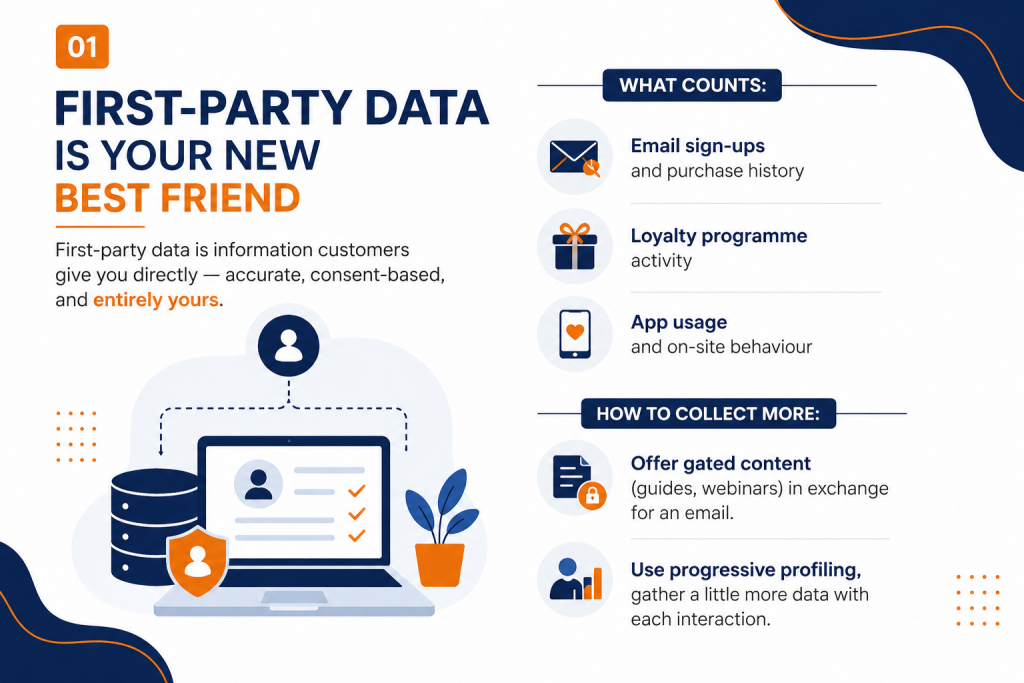
First-party data is information customers give you directly — accurate, consent-based, and entirely yours.
What counts:
- Email sign-ups and purchase history
- Loyalty programme activity
- App usage and on-site behaviour
How to collect more:
- Offer gated content (guides, webinars) in exchange for an email
- Use progressive profiling, gather a little more data with each interaction
💡 Pro tip: Connect all touchpoints in your CRM to build a unified customer profile. That’s where the real power lies.
2. Zero-Party Data: Ask Instead of Assume
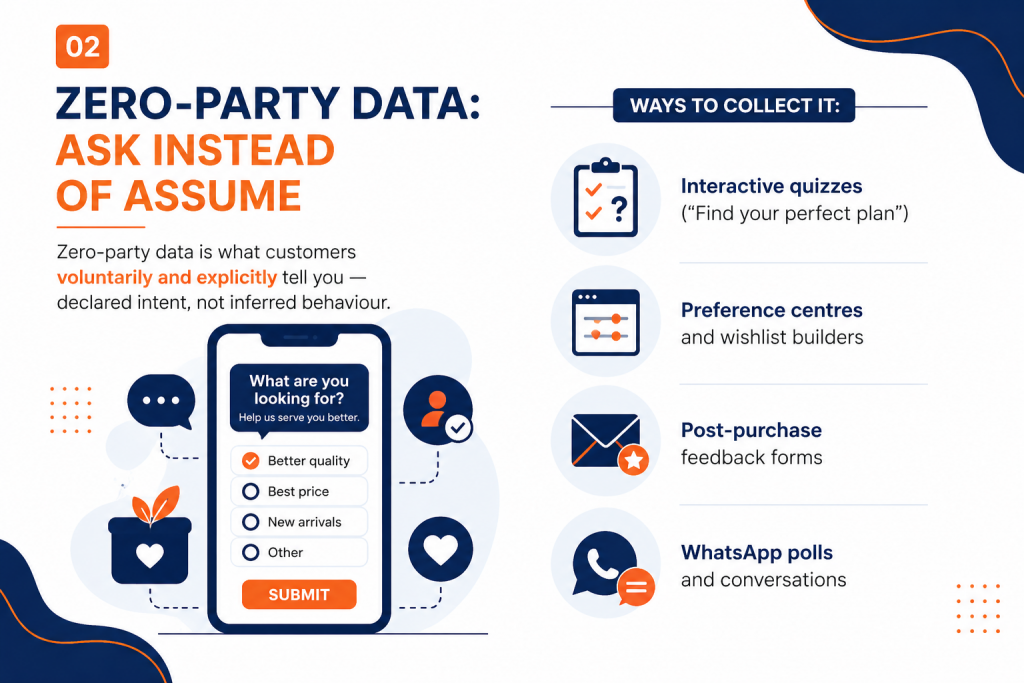
Zero-party data is what customers voluntarily and explicitly tell you, declared intent, not inferred behaviour.
Ways to collect it:
- Interactive quizzes (“Find your perfect plan”)
- Preference centres and wishlist builders
- Post-purchase feedback forms
- WhatsApp polls and conversations
It eliminates guesswork, builds trust, and drives better personalisation, with zero privacy risk.
3. Contextual Advertising Is Back
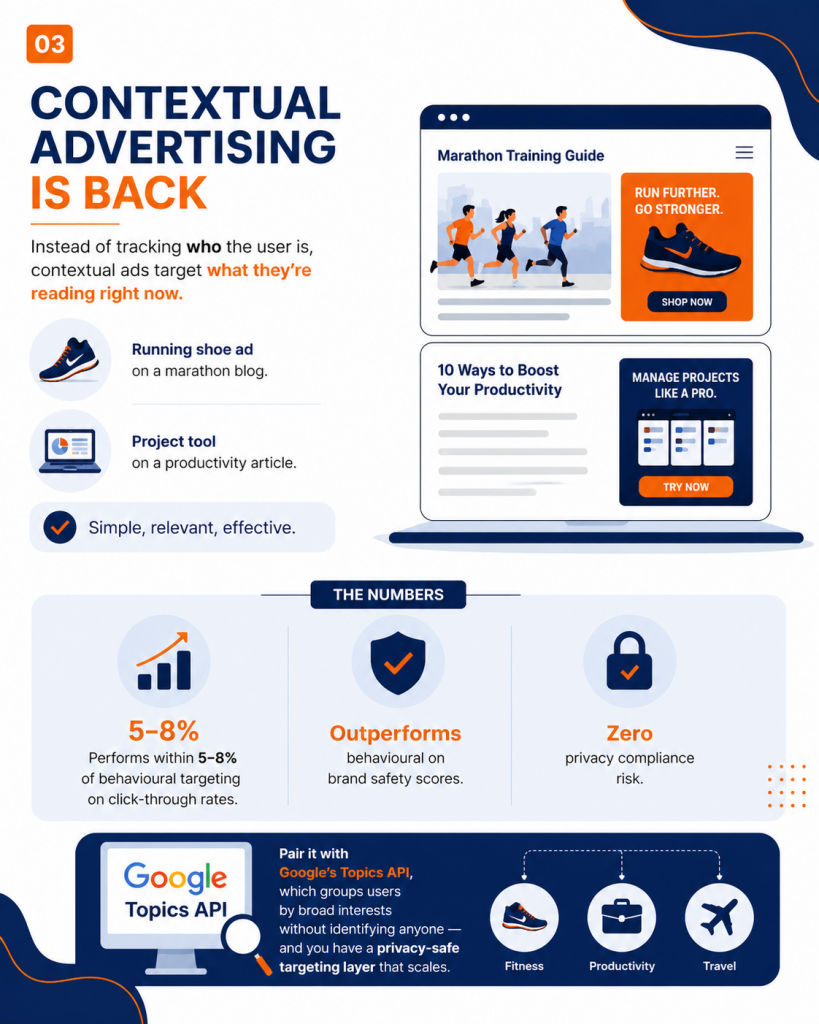
Instead of tracking who the user is, contextual ads target what they’re reading right now. Running shoe ad on a marathon blog. Project tool on a productivity article. Simple, relevant, effective.
The numbers:
- Performs within 5–8% of behavioural targeting on click-through rates
- Outperforms behavioural on brand safety scores
- Zero privacy compliance risk
Pair it with Google’s Topics API, which groups users by broad interests without identifying anyone and you have a privacy-safe targeting layer that scales.
4. Server-Side Tracking: Don’t Skip This
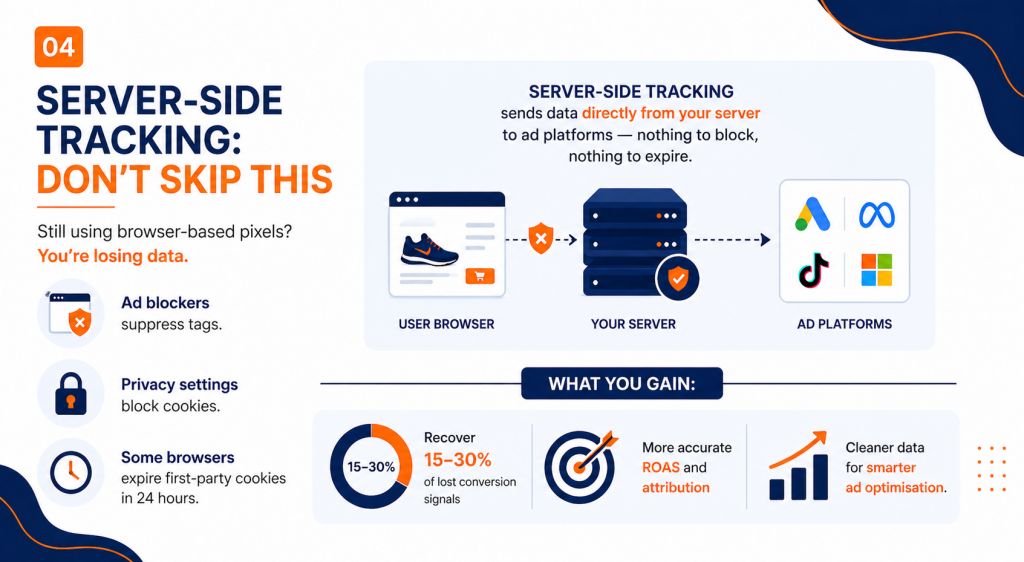
Still using browser-based pixels? You’re losing data. Ad blockers suppress tags. Privacy settings block cookies. Some browsers expire first-party cookies in 24 hours.
Server-side tracking sends data directly from your server to ad platforms — nothing to block, nothing to expire.
What you gain:
- Recover 15–30% of lost conversion signals
- More accurate ROAS and attribution
- Cleaner data for smarter ad optimisation
Google Tag Manager’s server-side container is the most widely used approach right now.
5. Own Your Channels
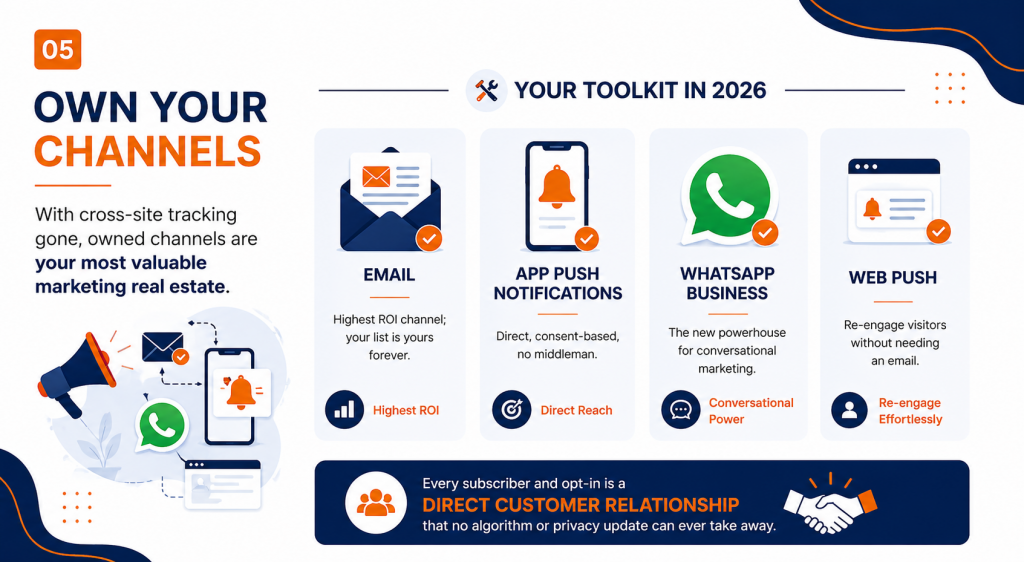
With cross-site tracking gone, owned channels are your most valuable marketing real estate.
Your toolkit in 2026:
- Email — highest ROI channel; your list is yours forever
- App push notifications — direct, consent-based, no middleman
- WhatsApp Business — the new powerhouse for conversational marketing
- Web push — re-engage visitors without needing an email
Every subscriber and opt-in is a direct customer relationship that no algorithm or privacy update can take away.
The Bottom Line
| Old Approach | New Approach |
|---|---|
| Track users across the web | Understand declared intent |
| Buy third-party audiences | Build first-party data |
| Client-side pixels | Server-side tracking |
| Assume preferences | Ask via zero-party data |
The brands winning in 2026 moved from tracking users → understanding intent → building trust. Marketing without cookies isn’t a handicap, it’s a forcing function that makes you a better marketer.
Are you cookieless-ready?
Test your 2026 marketing knowledge — 5 quick questions