
Free Google Search Index for Developers Is Ending: What You Need to Know
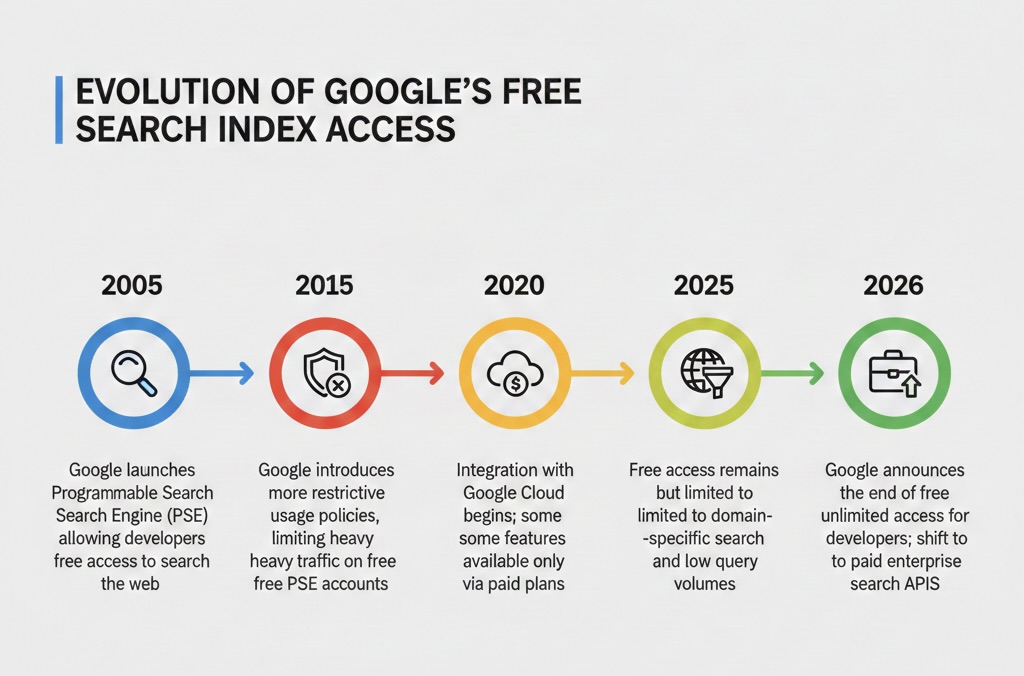
The free Google Search index for developers is coming to an end. Developers who rely on open web data must prepare for a major change. For many years, Google offered free or low-cost access to its search index, enabling developers to:
- Build search tools and research platforms
- Experiment with innovative web products
- Quickly test new ideas using web data
However, Google is now shifting away from this model. This change affects how developers discover, index, and retrieve web content. It also signals Google’s growing focus on paid, enterprise-level search solutions.
What Is Changing in Google’s Free Search Index?
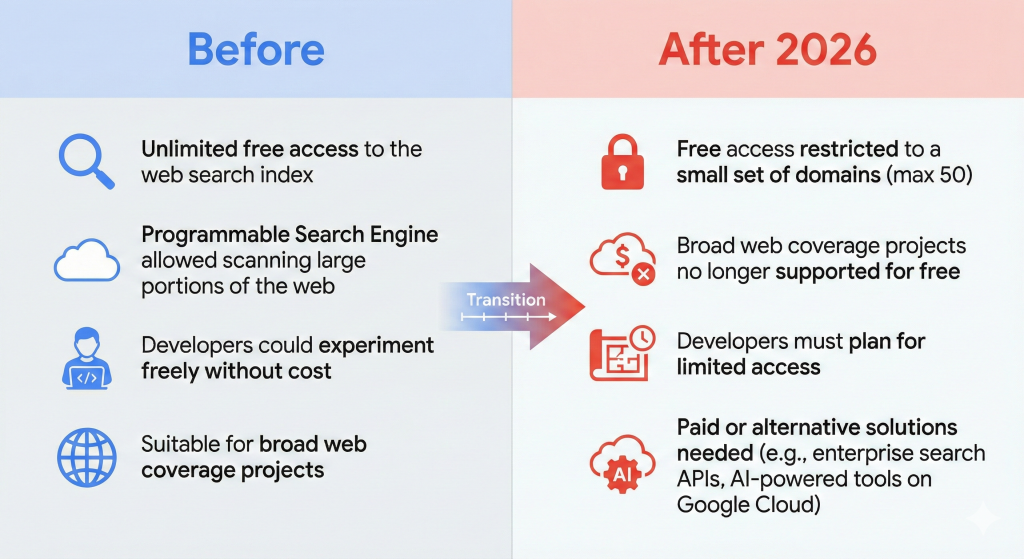
Google is ending unlimited free access to its web search index. Previously, tools like Programmable Search Engine allowed developers to scan large portions of the web. Going forward:
- Free access will be restricted to a small set of domains
- Broad web coverage projects will no longer be supported
- Developers will need to explore paid or alternative solutions
What developers should know:
- Paid options include enterprise search APIs and AI-powered tools on Google Cloud
- Everyday Google Search for users remains unchanged
- Developers must prepare for restricted access to search data
Why Google Is Ending Free Access
Google’s move aligns with its strategy to prioritize scalable, secure, and monetized services. Maintaining a free search index requires significant infrastructure and monitoring. Limiting access allows Google to:
- Reduce misuse
- Control operational costs
- Promote advanced, paid search solutions
For developers, this shift means:
- Moving from experimentation-focused tools to enterprise-grade platforms
- Accessing features like AI-driven relevance, analytics, and cloud integration
- Paying for solutions that provide long-term stability
Case Study: A Small Developer Forced to Adapt
A small startup built a job-search aggregation platform for students using Google’s free search index. When free access was restricted:
- The platform could no longer index enough sources
- The team had to choose between:
- Paying for Google’s enterprise search tools, or
- Rebuilding the system using open-source technology
Solution:
- Adopted a hybrid approach combining limited paid APIs and self-hosted indexing
- Resulted in higher costs but better data quality and system control
Lesson learned: Free tools support early experimentation, but long-term products require sustainable infrastructure.
What Developers Should Do Next
Developers should take the following steps:
- Audit current usage of Google’s search index
- Identify critical needs for full-web access
- Explore alternatives early, including:
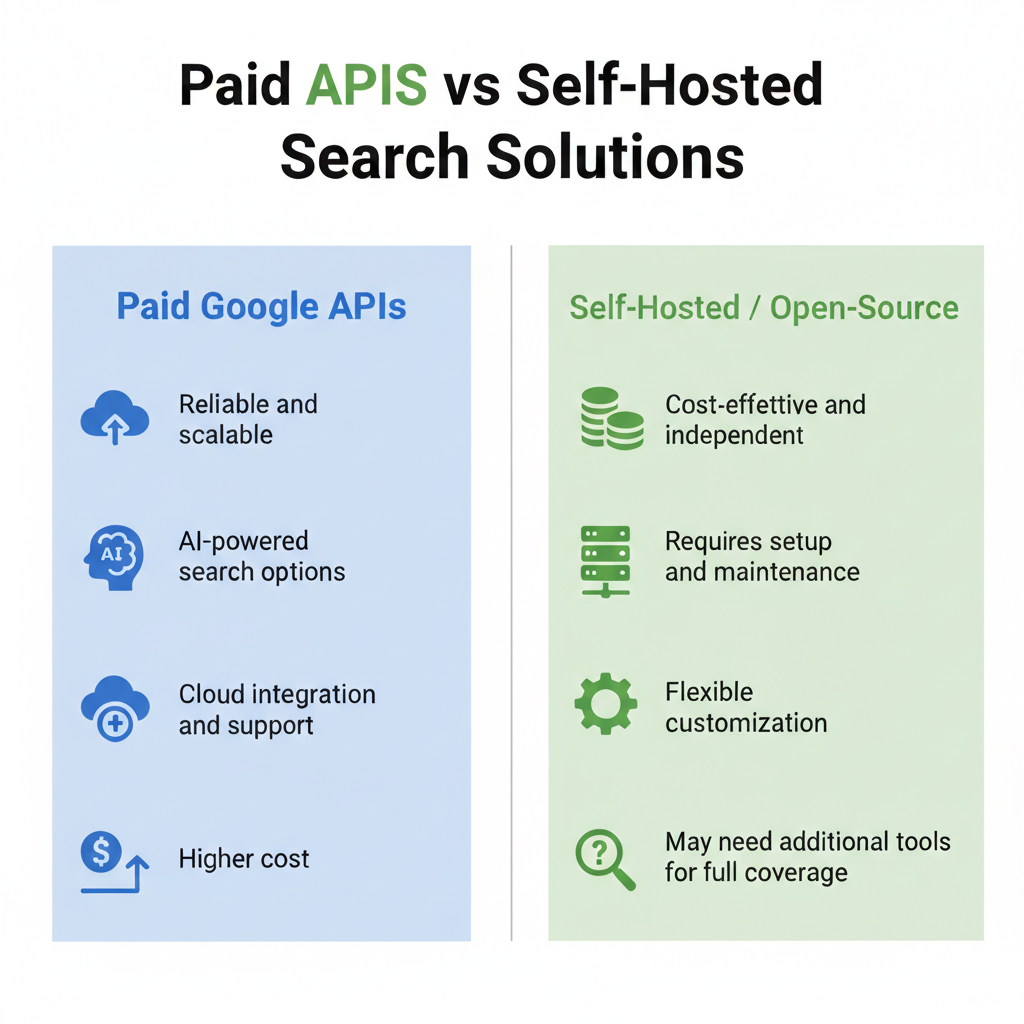
- Paid Google enterprise APIs for reliability and scale
- Open-source search engines for cost control
- Niche third-party APIs or custom crawlers
Tip: Planning ahead allows teams to test multiple options and avoid rushed migrations.
Frequently Asked Questions
Q1. Will this change affect how Google indexes my website?
No. Google will continue to crawl and index websites as usual. This change only affects developer access to the search index.
Q2. Does this impact SEO or search rankings?
No. SEO performance and rankings remain unchanged.
Q3. Can I still create a search engine for my own website?
Yes. Limited free access still works well for domain-specific or internal search.
Q4. Are paid alternatives required?
Not always. Developers can also use open-source or third-party search solutions.
Q5. Is this change permanent?
At this time, Google has not announced plans to restore unlimited free access.
Conclusion
The removal of free Google Search Index access for developers marks a significant shift in how web data is accessed and used. While it presents challenges, it also encourages developers to build more intentional, scalable, and independent solutions. Those who adapt early will be better equipped to navigate the evolving search ecosystem.