
SEO to AEO: The Future of Search in 2026
Try this for a second, open Google and type a random question.
Almost instantly, you’ll notice something different. Instead of scrolling through links, you’re given a direct answer right away.
Clearly, search isn’t what it used to be.
For years, SEO (Search Engine Optimization) focused on helping users find websites. However, in 2026, it’s no longer just about being found, it’s about being the answer. That’s where AEO (Answer Engine Optimization) comes in.
What still works and what’s changing
SEO is still essential. It helps content rank higher through keywords, backlinks, and structured optimization.
For instance, when someone searches “best budget smartphones,” SEO ensures relevant pages appear at the top. As a result, brands gain visibility and traffic.
However, user behavior has changed significantly. Today, ranking alone isn’t enough.
Why search is evolving
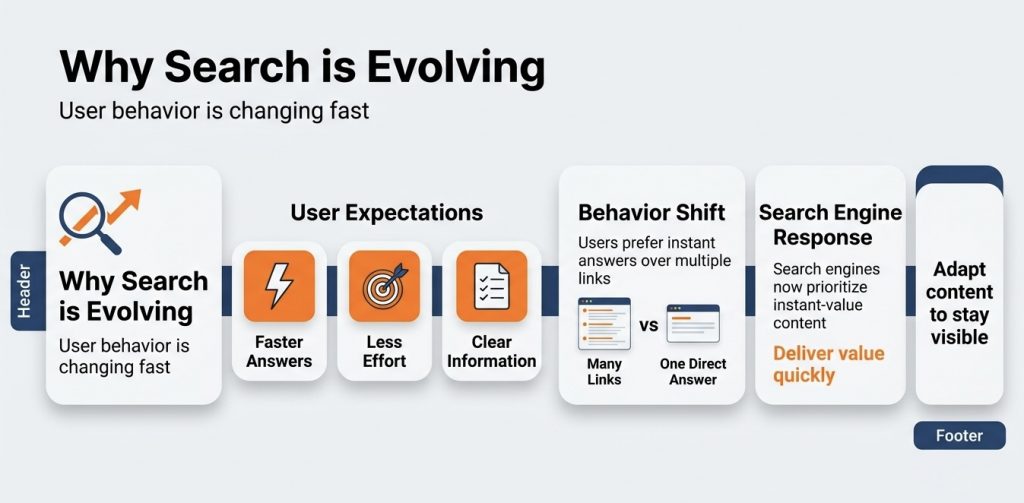
Users now expect:
- Faster answers
- Less effort
- Clear information
Instead of clicking multiple links, they prefer immediate responses. Therefore, search engines are prioritizing content that delivers value instantly.
This is exactly why AEO is becoming critical.
What AEO means in practice
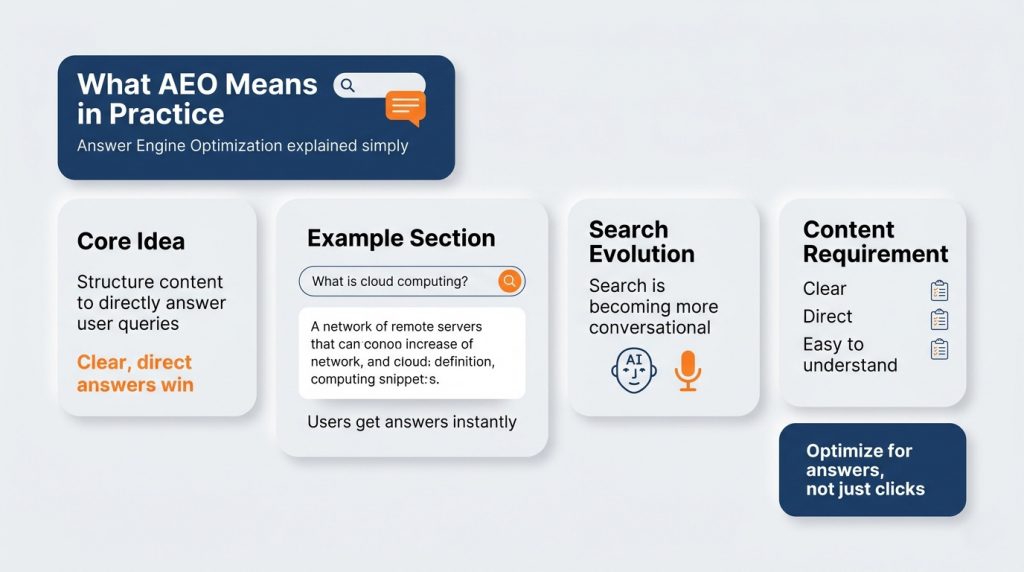
AEO focuses on structuring content so it directly answers user queries.
For example, when someone searches “What is cloud computing?”, they often see a concise definition at the top. In this case, the user gets what they need without clicking further.
Moreover, with the rise of AI tools and voice assistants, search has become more conversational. As a result, content must be clear, direct, and easy to understand.
SEO vs AEO (made simple)
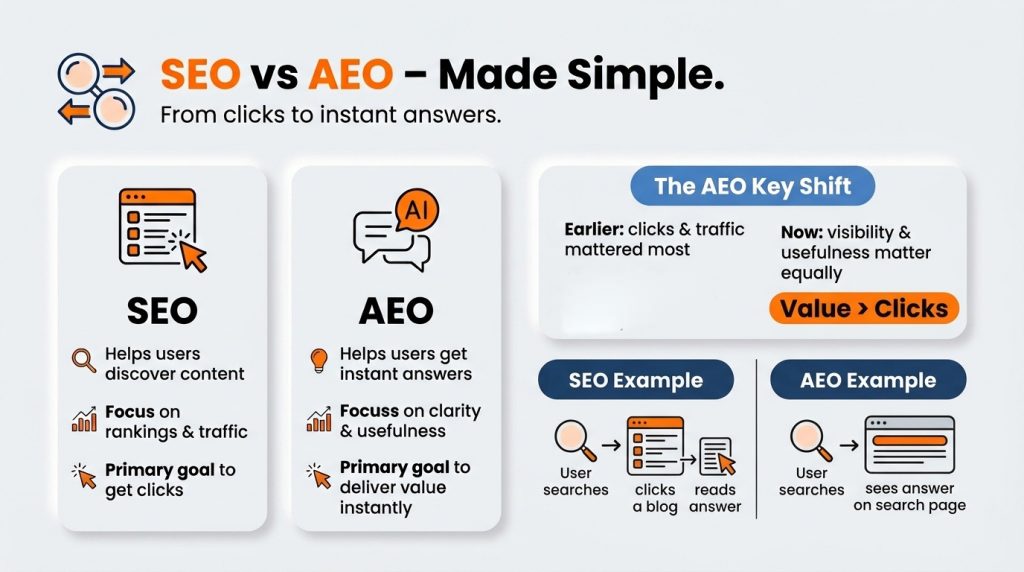
To understand the difference:
- SEO helps users discover content
- AEO helps users gain immediate value
Earlier, success was measured by clicks and traffic. Now, on the other hand, visibility and usefulness matter just as much.
Although this shift may seem subtle, it significantly impacts how content should be created.
How to adapt to this shift
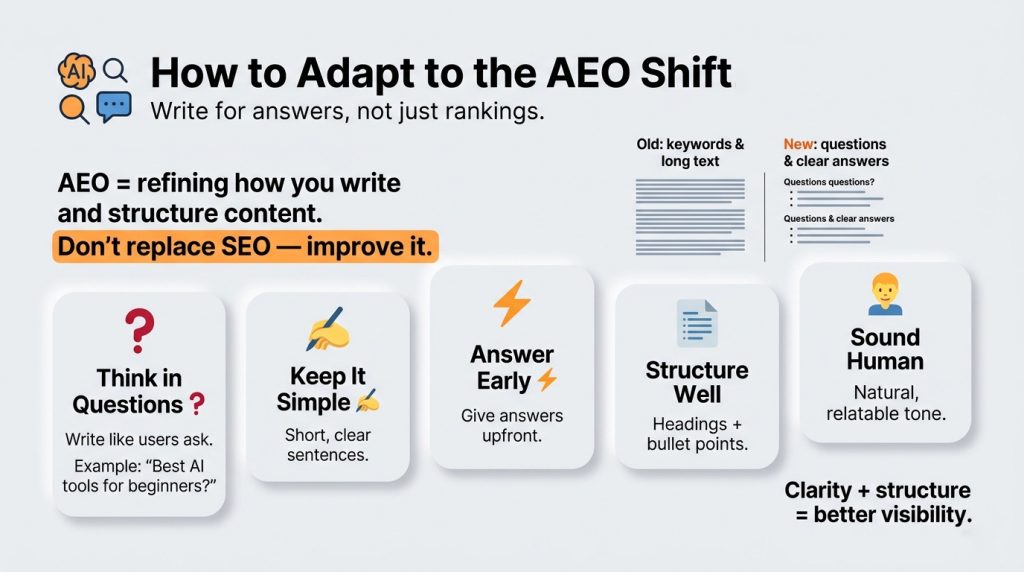
Adapting to AEO doesn’t mean abandoning SEO. Instead, it requires refining how content is written and structured.
1. Think in questions
Users are no longer typing random keywords. Instead, they ask full questions.
So, rather than writing “AI tools guide,” try:
“What are the best AI tools for beginners?”
This aligns better with modern search behavior.
2. Keep content simple
Complex writing often reduces engagement. Therefore, clarity should always come first.
Use:
- Short sentences
- Simple words
- Clear explanations
In other words, write like you’re having a conversation.
3. Answer early
Don’t make users search within your content.
Ideally, provide a direct answer within the first few lines. Then, expand with additional details. This improves both readability and search performance.
4. Structure content properly
Good structure improves understanding.
For example, use:
- Headings
- Bullet points
- Short paragraphs
Consequently, both readers and search engines can process information faster.
5. Sound human
Previously, keyword stuffing was common. Now, however, natural language works better.
Write in a way that feels real and relatable. After all, people connect more with human content than mechanical text.
A quick reality check
So, is SEO still relevant? Absolutely.
In fact, SEO remains the foundation of online visibility. Without it, content may never appear in search results.
At the same time, AEO ensures content stands out once it does.
Think of it this way:
SEO gets attention, while AEO delivers value.
The future of search
Looking ahead, search will continue to become faster, smarter, and more conversational. Therefore, brands must shift their focus. Instead of just ranking higher, they need to provide clearer, more helpful answers. Ultimately, the goal is simple, be useful.
So next time you create content, pause and ask:
“Am I just trying to rank, or am I actually helping?”
Because in 2026, the brands that succeed won’t be the ones creating the most content.
Instead, they’ll be the ones creating the most helpful answers. To stay updated on the latest in digital technology and practical insights, visit Cleuz Blog and explore more resources for forward-looking development.