
Zero-Click Search: Is Your Brand Still Visible?
Have you ever searched something on Google and found your answer instantly, without clicking any website? That’s called zero-click search, and it’s changing how users interact with search engines today. For brands and marketers, this raises an important question: if users don’t click, is your brand still visible online?
Let’s understand this in a simple and practical way.
What Is Zero-Click Search?
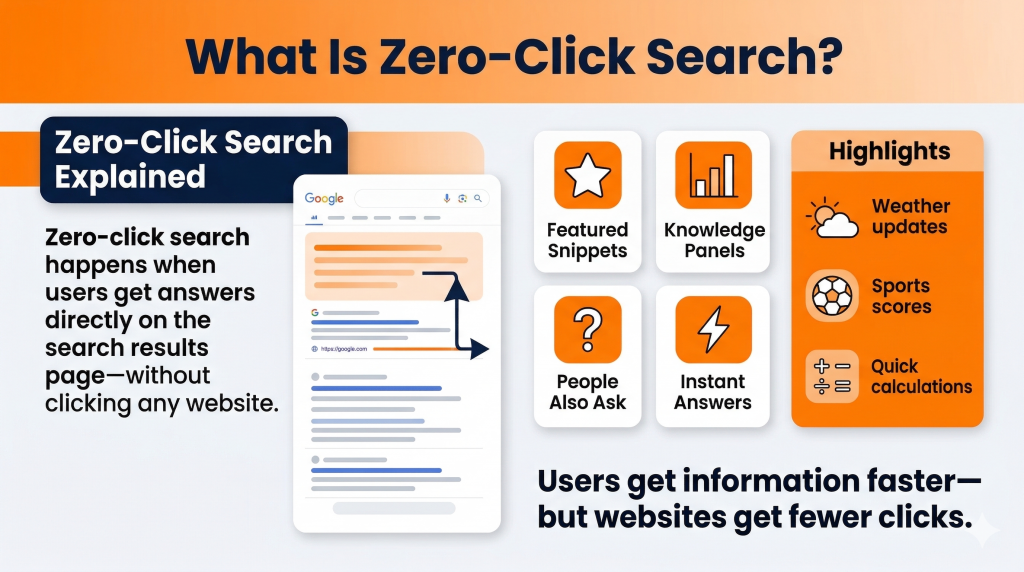
Zero-click search happens when users get the information they need directly on the search engine results page (SERP), without visiting any website.
This usually comes from features like:
- Featured snippets
- Knowledge panels
- “People also ask” sections
- Instant answers like weather, sports scores, or calculations
For example, if you search “weather in Mumbai today,” Google shows the result instantly. If you type “5+5” or search for an IPL score, you get the answer right away without clicking anything.
Why Zero-Click Search Matters
Zero-click searches are increasing rapidly. Studies show that more than half of Google searches end without a click.
This means:
- Lower website traffic
- Fewer chances for conversions
- Increased competition on the search page
However, visibility hasn’t disappeared, it has simply changed. Instead of focusing only on clicks, brands now need to focus on appearing directly in search results.
How Your Brand Can Stay Visible
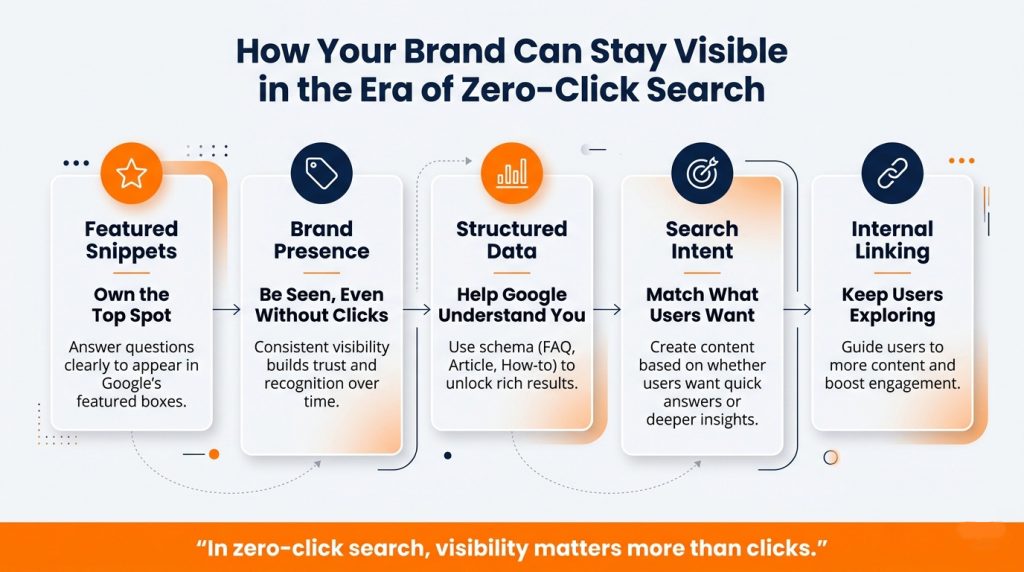
To succeed in this new environment, brands must optimize for visibility, not just traffic.
1. Optimize for Featured Snippets
Featured snippets are the highlighted answer boxes that appear at the top of search results. They give your brand instant exposure.
To improve your chances:
- Answer questions clearly and simply
- Use bullet points and short paragraphs
- Match your headings with common search queries
For example, a simple definition of “zero-click search” can increase your chances of getting featured.
2. Build Strong Brand Presence
Even if users don’t click, they still see your brand name. Over time, this builds trust and recognition.
Make sure:
- Your content is helpful and easy to read
- Your brand name appears naturally
- Your messaging stays consistent
You can also guide users with internal links like “Read more insights on our blog” or “Explore the latest updates in digital marketing.”
3. Use Structured Data
Structured data helps search engines understand your content better. This increases your chances of appearing in rich results.
Examples include:
- FAQ schema
- Article schema
- How-to schema
These formats improve how your content appears and make it more noticeable on search pages.
4. Focus on Search Intent
SEO today is more about understanding user intent than just using keywords.
Ask:
- Is the user looking for a quick answer?
- Do they want detailed information?
- Are they comparing products or services?
For example, someone searching “what is zero-click search” wants a simple explanation, while someone searching “best SEO tools” wants options to compare.
5. Strengthen Internal Linking
Internal linking helps users explore more of your content and improves your site structure.
Examples:
- “Check our beginner’s guide to SEO basics.”
- “Learn how to increase your website traffic effectively.”
This keeps users engaged and improves overall SEO performance.
The Future of Search Visibility
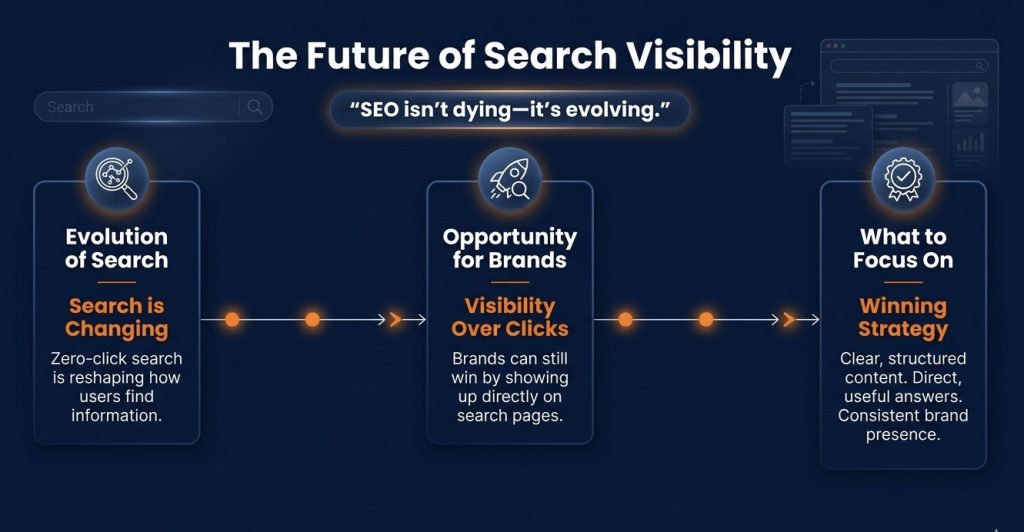
Zero-click search does not mean the end of SEO. Instead, it shows how search behavior is evolving.
Brands that adapt can benefit from higher visibility directly on the search page.
Focus on:
- Clear and structured content
- Providing direct and useful answers
- Building trust through consistent content
Final Thoughts
Zero-click search is reshaping how users consume information online. While traditional clicks may reduce, brand visibility is still achievable. The key is to focus on being visible, helpful, and trustworthy.
In today’s digital world, success is not only about getting users to click your link, it’s about making sure your brand is seen, remembered, and trusted even without a click.
To stay updated on the latest in digital technology and practical insights, visit Cleuz Blog and explore more resources for forward-looking development.