
Google Assistant Is Gone, Gemini Is Everywhere: What It Means for You
If you’ve had an Android phone for a while, Google Assistant has probably been part of your daily routine without you even thinking about it much. Setting alarms, checking the weather, sending a quick text while your hands are full, it’s just been there, quietly working in the background for close to a decade.
That’s changing now, and it’s not a rumor or something Google is “planning” to do someday. It actually started happening on September 4, 2026. Google has begun removing Assistant from Android devices and replacing it with Gemini, its newer AI assistant. Let’s walk through what’s really going on here, because there’s more nuance to it than a simple headline suggests.
How Google Announced This
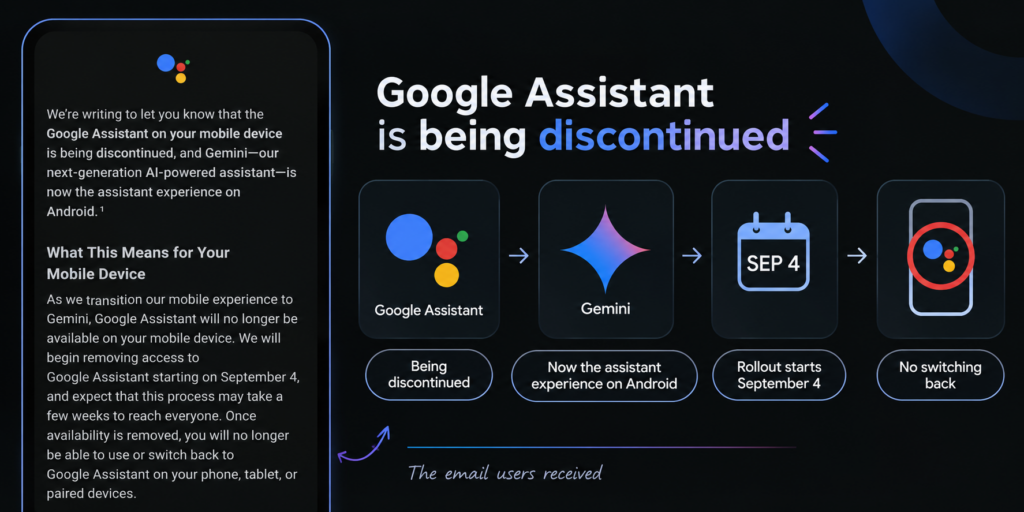
Google didn’t make a big flashy announcement this time. Instead, users started receiving a fairly plain email, one that quietly said Google Assistant is “being discontinued,” and that Gemini is now “the assistant experience on Android.”
It’s a small phrase, but it says a lot. Google isn’t offering Gemini as an alternative anymore, it’s positioning it as the replacement, full stop.
Now, this doesn’t mean your phone will suddenly change overnight. Google is rolling this out gradually, spread across different devices and regions over several weeks. So if your friend’s phone switches before yours does, that’s completely normal. But here’s the part worth remembering: once your device does switch over to Gemini, there’s no toggle to switch back to the old Assistant. That change is permanent.
Which Devices Are Actually Affected
To keep this simple, here’s what’s included in this particular rollout:
- Android phones and tablets
- Wear OS smartwatches
- Compatible headphones and earbuds
- Android Auto, specifically when it’s projected from a paired phone
And just as importantly, here’s what’s not part of this September rollout: cars with Google built-in, Google TV devices, and Home speakers or smart displays. If your phone is older and doesn’t meet Gemini’s minimum requirements, roughly 2GB of RAM and Android 10 or higher, you’ll likely keep Assistant a bit longer too, simply because the software can’t support the switch yet.
Why This Took So Long to Actually Happen
Here’s something interesting: Google first talked about replacing Assistant with Gemini all the way back in March 2025. At the time, the plan was to complete the whole transition by the end of that year.
That didn’t happen. The timeline shifted more than once, reports pointed to an end-of-2025 target, then a revised push toward early-to-mid 2026, before Google finally landed on September 2026 as the real starting point. Google’s own explanation was fairly honest about it, they said they needed more time to make sure the switch from Assistant to Gemini actually felt smooth, rather than rushing it out and dealing with a messy transition.
Smart home devices reportedly made a similar shift earlier, with some reports pointing to late 2025 for Gemini for Home replacing Assistant across Google’s speakers, displays, and cameras. So in a way, mobile was always going to be the harder, slower part of this puzzle.
What Actually Changes Once You’re on Gemini
| Google Assistant | Gemini | |
|---|---|---|
| Best suited for | Short, direct voice commands | Longer, conversational requests |
| Memory | Doesn’t really remember previous requests | Understands context across a conversation |
| Where it lives | A standalone assistant app | Built into Search, Workspace, and Android itself |
| Can you undo it? | Not applicable | No, the switch is permanent |
Why This Actually Matters, Beyond Just Your Phone
This isn’t just Google swapping one app icon for another. Throughout 2026, Google has been steadily weaving Gemini into nearly everything it makes, Search, Workspace, and now, finally, Android’s core assistant experience. Assistant was really one of the last pieces still standing on its own.
For everyday users, this means the line between “asking Google a question” and “using an AI assistant” is basically disappearing. They’re becoming the same experience.
And if you run a business or think about visibility online, there’s a bigger signal buried in here too. As more people start asking Gemini questions directly instead of typing into a search bar, being visible inside AI-generated answers starts to matter just as much as ranking on a traditional search results page.
What You Should Actually Do About It
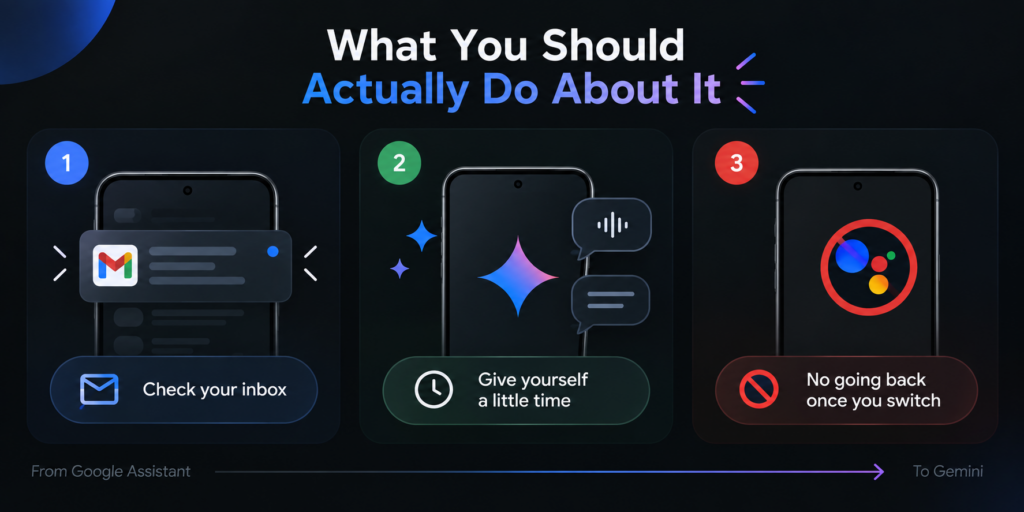
Honestly, not much. This isn’t something you opt into or need to configure. But a few small things are worth keeping in mind:
- Check your inbox, Google likely already emailed you about this.
- Give yourself a little time to adjust if you’re used to short, command-style requests.
- Remember, once your device switches, there’s no going back to the old Assistant.
FAQs
Q1. When exactly did this rollout begin?
Google started removing Assistant on September 4, 2026, rolling it out gradually by device and region.
Q2. Can I switch back to Assistant later if I don’t like Gemini?
No, once your device makes the switch, reverting isn’t an option.
Q3. Will every device change on the same day?
No, it depends on your specific device, region, and eligibility, and it can take a few weeks.
Q4. Does this affect my Google Home speaker too?
No, Google reportedly shifted Home speakers to Gemini for Home separately, ahead of this September rollout.
Q4. Why did Google delay this transition before finally rolling it out?
Google said the extra time was needed to make sure the shift felt smooth, rather than rushing users into it.
To stay updated on the latest in digital technology and practical insights, visit Cleuz Blog and explore more resources for forward-looking development.