
Human or AI? Why Authenticity Is the New Luxury
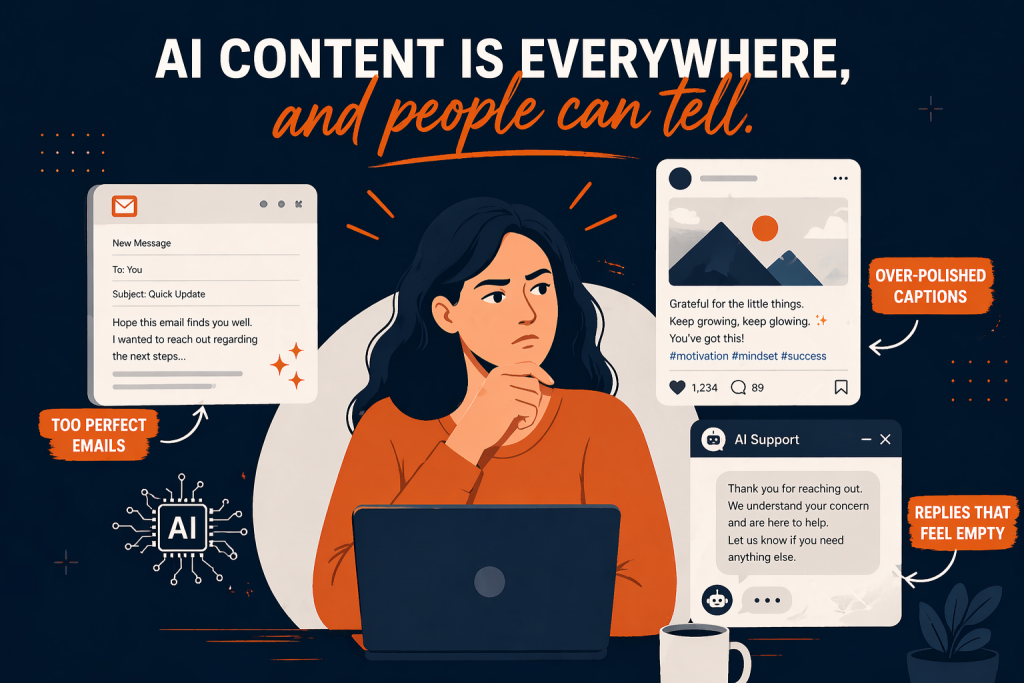
Let’s be honest, you’ve noticed it too. The emails that feel slightly too polished. The social captions with suspiciously perfect grammar. The customer support reply that technically answers your question but somehow feels like it came from nowhere. AI-generated content is everywhere, and increasingly, people can tell.
In fact, we’re living in what researchers and marketers are calling the Post-AI Saturation Era, a moment where AI output is so abundant that it has become background noise. As a result, something radical is happening: authenticity has become a luxury good.
The Great Homogenisation Problem
When everyone uses the same large language models, the output starts to rhyme. You get the same sentence structures, the same tonal patterns, and the same perfectly balanced arguments. What was once a competitive advantage, speed and scale, is now a liability. Therefore, if your content sounds like everyone else’s, it simply won’t land.
Marketers widely refer to this as AI content fatigue. Moreover, consumers are developing a sixth sense for it. A 2024 Edelman Trust Barometer found that trust in AI-authored communication is significantly lower than in human-authored content, particularly in high-stakes categories like health, finance, and personal advice.
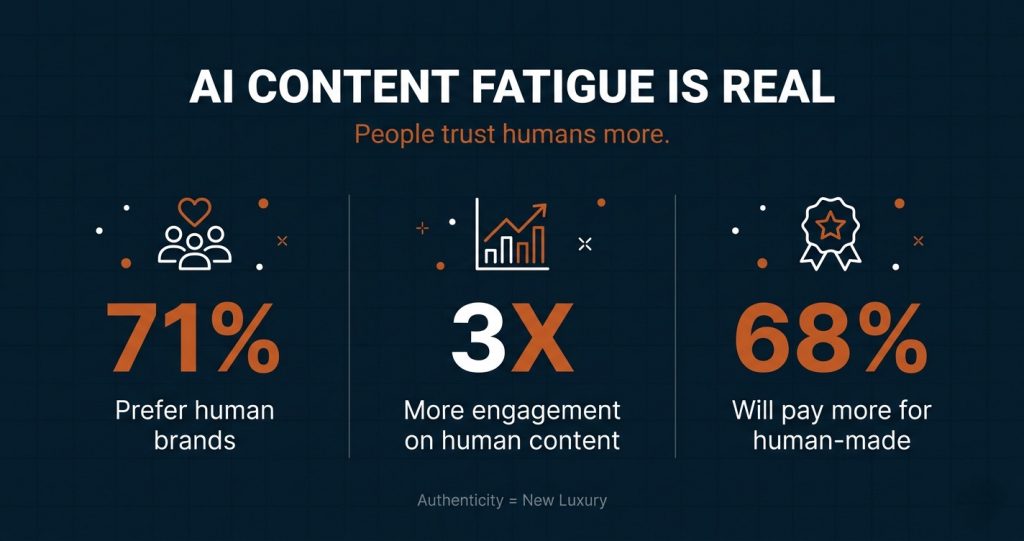
Here’s what the data says:
- 71% of consumers prefer brands that feel “genuinely human” online (Sprout Social, 2024)
- Posts identified as personally written see 3x more engagement than AI-drafted ones
- 68% of buyers say they would pay a premium for a human-crafted product or service
What “Authentic” Actually Means in 2026
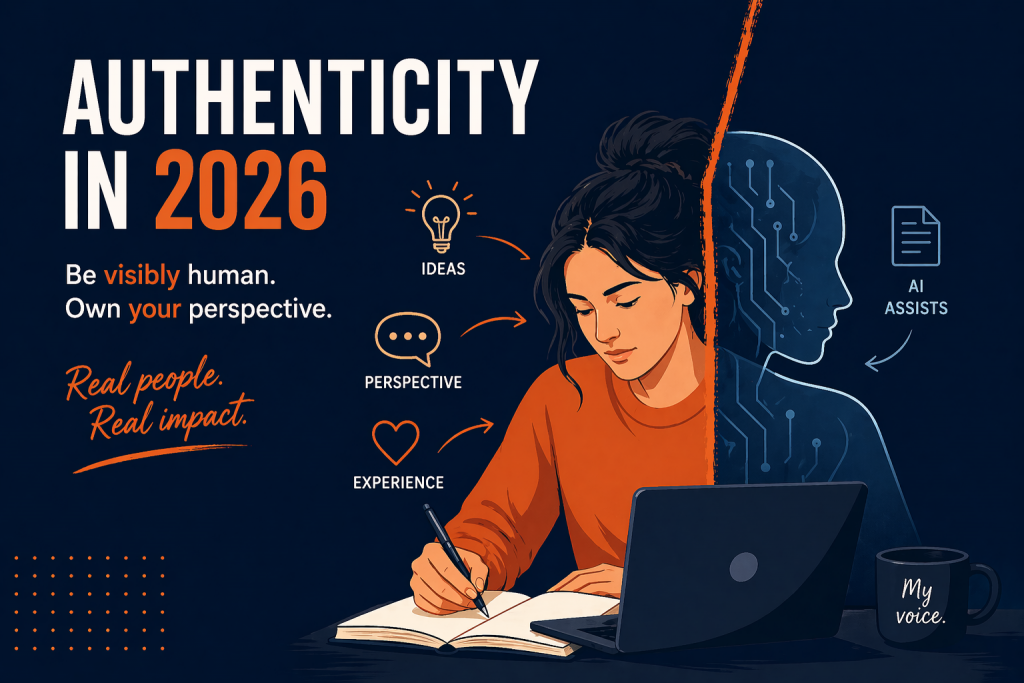
Here’s where things get interesting and a little uncomfortable. Authenticity in 2026 isn’t just about being human. Rather, it’s about being visibly human. Specifically, it means showing your reasoning, your uncertainty, and your perspective. It means writing something that only you could have written, not something a prompt could have produced.
This is precisely why the concept of Human-in-the-Loop Content is gaining traction among forward-thinking creators and brands. The idea is simple: AI can assist, draft, and suggest, but a real person must shape the voice, assert the opinion, and take ownership. In other words, think of it less as “did AI touch this?” and more as “does a real point of view live here?”
Furthermore, the new signal of quality isn’t perfection, it’s specificity. The personal anecdote, the counterintuitive take, the admission that you don’t have all the answers, these are things AI can simulate, but rarely nail.
Why Authenticity Is Now a Business Strategy
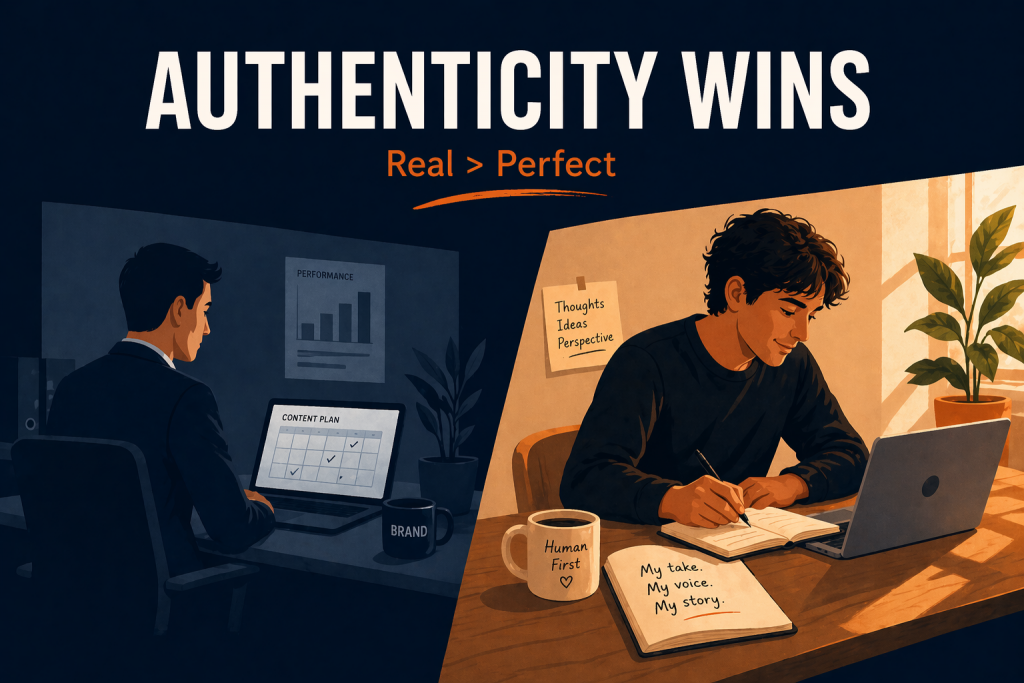
Brands that understand this shift are already moving.
For example, independent newsletter writers on Substack are outperforming major media outlets. Similarly, founders who show up on LinkedIn with raw, unpolished posts are building more trust than corporate accounts spending thousands on content production. As a result, digital minimalism and raw transparency have become the new premium aesthetics.
The luxury industry figured this out long ago. Handcrafted goods command higher prices not just because they’re better, but because they carry a human story. Consequently, that same logic now applies to information, communication, and creative work. However, unlike a handmade bag, your brand’s human story doesn’t cost more to produce, it just requires more intention.
How to Tell If Your Brand Has an Authenticity Problem
Before making any changes, it helps to honestly audit where you currently stand. Ask yourself: could a competitor post the exact same content and nobody would notice? If the answer is yes, that’s your signal. Additionally, check whether a real person’s name, face, or opinion appears anywhere in your last ten posts. If not, your content is essentially anonymous and anonymous content doesn’t build trust.
Another useful test is the specificity check. Generic advice like “be consistent on social media” could come from anyone. By contrast, a founder sharing why they almost quit in month three, with real numbers and real emotions, could only come from them. That difference is everything.
So, What Should You Do About It?
The good news is that fixing this doesn’t mean abandoning AI, it means repositioning it. Use it as a power tool, not a ghostwriter. Let it handle research, structure, and drafts, then step in with your perspective, your experience, and your voice. That’s where the value lies.
Given how perceptive audiences have become, it’s also worth ensuring your content truly sounds human. Running AI-assisted drafts through a AI detection tool can help spot anything that feels too generic, so you can refine it before publishing.
Start small. Pick one format, a weekly LinkedIn post, a newsletter, or a short blog and commit to shaping it in your own voice. Over time, that one authentic touchpoint will outperform everything else.
In a feed full of generated content, the most radical thing you can do is sound like yourself. Right now, that’s worth more than ever.
Not sure where your brand stands? Take the 60-second Authenticity Score quiz below.