
New Trends in Creating World-Class Websites and Mobile Apps for Colleges in India
A college website is often the first interaction a student has with an institution. Before visiting a campus or speaking to the admission team, students usually check the college website to explore courses, fees, admission details, events, placements, and campus facilities.
Because of this, colleges in India are now looking beyond basic websites. They are investing in world-class websites and mobile apps that make information easier to access and improve the overall student experience.
Here are some of the important trends shaping college websites and mobile apps today.
1. Mobile-First Websites
Students spend a significant amount of time on their smartphones, so a college website needs to work perfectly on smaller screens. A mobile-first website should have simple navigation, readable content, clear buttons, and fast-loading pages. Important information such as admissions, courses, examination dates, fees, and contact details should also be easy to find.
A website that works well on mobile can make a much better first impression on prospective students.
2. AI-Powered Student Support
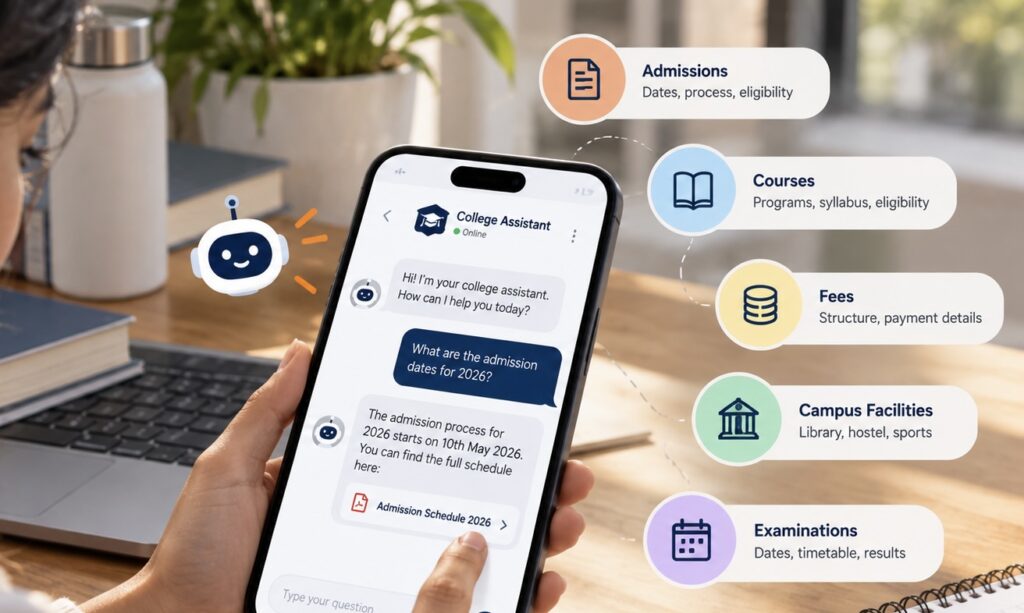
Artificial intelligence is becoming a useful addition to education websites and apps. One practical example is an AI chatbot that can answer common student questions.
Students could ask about admission dates, courses, eligibility, fees, campus facilities, or examination schedules without having to search through multiple pages.
This does not mean replacing college staff. Instead, AI can handle routine questions and allow staff to focus on more important student requirements.
3. Personalised Student Dashboards
Every student has different needs. A first-year student may want timetable and orientation information, while a final-year student may be more interested in placements and career opportunities. Modern college apps can provide personalised dashboards based on the student’s profile.
Students can access information such as:
- Attendance
- Timetables
- Examination schedules
- Results
- Fee details
- Notices
- Events
- Assignments
Having these services in one place can make everyday college activities much simpler.
4. Better Accessibility
A world-class college website should be accessible to everyone. This includes students and visitors who may use screen readers, keyboard navigation, or other assistive technologies. Features such as good colour contrast, readable fonts, alternative text for images, captions, and simple navigation can make a website more inclusive.
Accessibility is therefore becoming an important part of modern website design rather than an optional feature.
5. Faster and Simpler Websites
A beautiful website is not useful if it takes too long to load. Students expect websites to open quickly, particularly when using mobile networks. Colleges are therefore focusing on image optimisation, clean website structures, efficient code, and better hosting.
At the same time, websites are becoming simpler. Instead of filling every page with information, colleges are focusing on clear layouts and content that helps visitors find what they need quickly.
6. Digital Admissions and Online Services
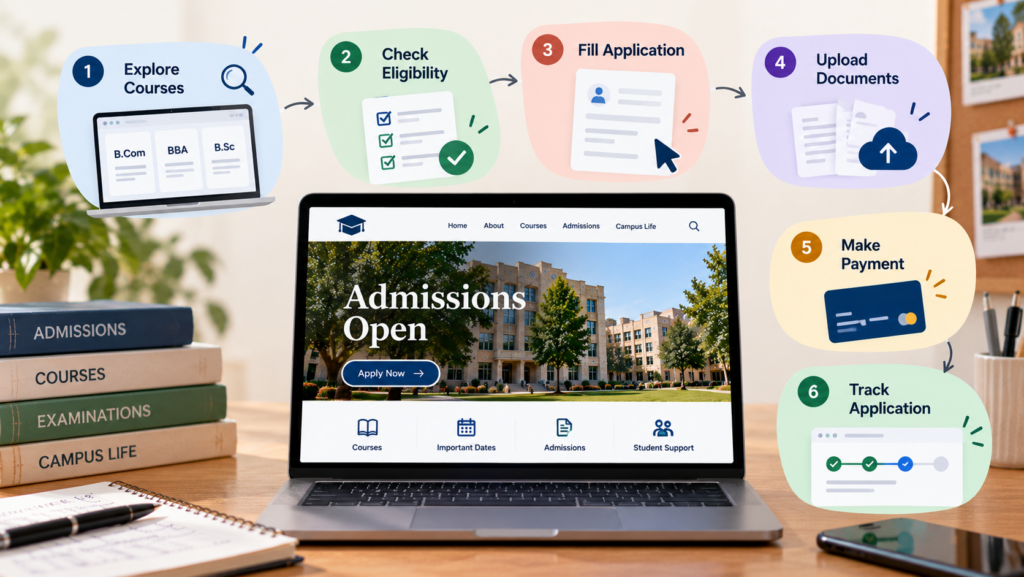
The admission process is also becoming more digital. Students increasingly expect to complete important steps online rather than visiting the college for every requirement. A modern college website can allow students to explore courses, check eligibility, submit enquiries, fill out applications, upload documents, make payments, and track their application status.
This creates a smoother experience for students while also reducing repetitive administrative work for colleges.
7. Integrated College Mobile Apps
College apps are no longer limited to sending notifications. They are becoming a central platform for student services. An app can bring together digital ID cards, attendance, fees, examination information, library services, notices, events, and other important resources.
When different services are connected, students do not have to switch between multiple platforms to complete simple tasks.
8. Stronger Security
As more college services move online, protecting student information becomes increasingly important. Websites and apps may handle personal details, academic records, applications, and online payments. Therefore, colleges need secure login systems, encryption, regular updates, access controls, and reliable backup systems to protect their digital platforms.
What Should Colleges Focus On?
Creating a world-class college website or mobile app is about more than technology. It should be fast, mobile-friendly, accessible, secure, and easy to use. As student expectations evolve, colleges need digital platforms that simplify communication, admissions, and everyday campus services.
By adopting trends such as AI, personalised dashboards, mobile-first design, and digital admissions, colleges can create a smarter and more connected digital experience. Cleuz helps educational institutions build modern websites, mobile apps, and digital solutions designed around student needs. Explore Cleuz