
Innovations in Cooperative Banking: Working for the Nation
Cooperative banks have quietly powered India’s grassroots economy for over a century. But quiet does not mean stagnant. Across urban centres, semi-urban towns, and rural districts, cooperative banks are embracing innovation — not to compete with large commercial banks, but to serve their members more effectively. In doing so, they are working harder than ever for the nation.
Here is a look at the key innovations reshaping cooperative banking in India today.
From Passbooks to Digital Platforms
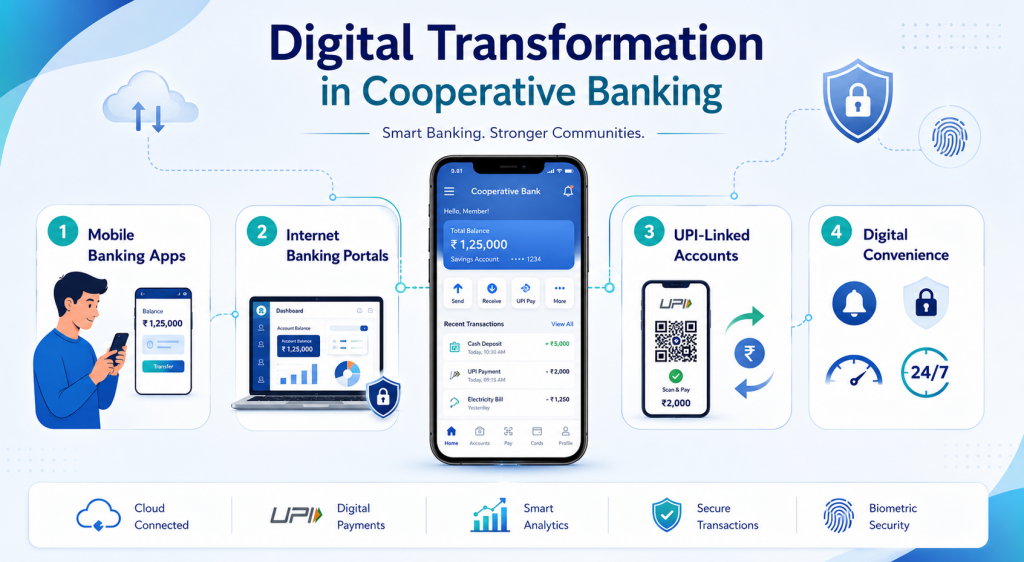
The most visible change in cooperative banking is the shift to digital. Many cooperative banks now offer mobile banking apps, internet banking portals, and UPI-linked accounts. This transition has dramatically improved access for members in underserved areas, reducing branch dependency and bringing banking closer to everyday life.
Core banking system (CBS) adoption has been a turning point. It connects all branches on a single unified platform, enabling real-time transaction processing, faster loan approvals, and centralised record-keeping. For a sector that once ran on paper registers, this is a fundamental leap forward.
Key Technology Innovations at a Glance
- CBS Integration: Seamless multi-branch operations with real-time data sync across all locations
- UPI and IMPS: Instant fund transfers enabled even at rural branch counters
- Mobile banking apps: Account management, loan EMI payments, and FD booking on the go
- Digital loan processing: Reduced turnaround time from weeks to just a few days
- Aadhaar-based KYC: Faster member onboarding through paperless, biometric verification
Financial Products Built Around Real Lives
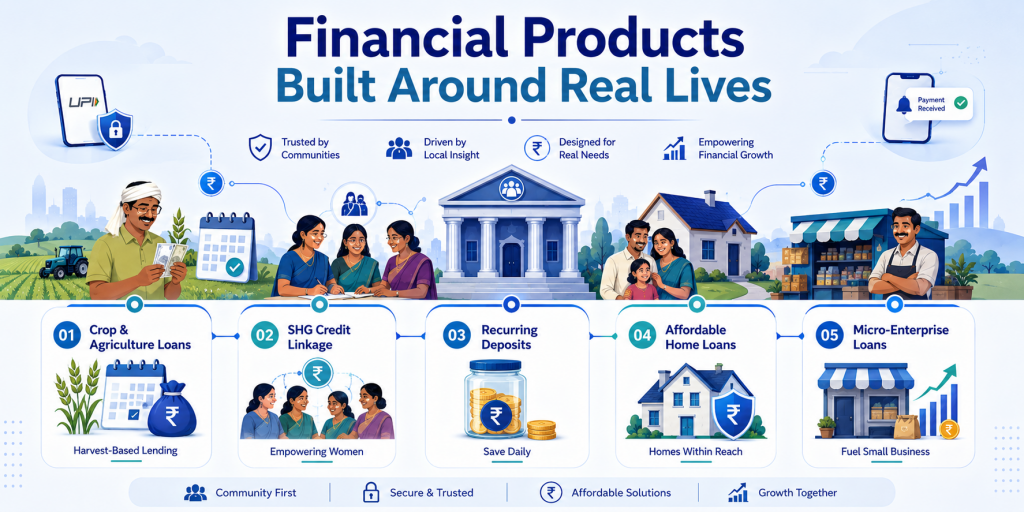
Unlike large commercial banks that design products for the average urban customer, cooperative banks understand the specific financial rhythms of their communities. This local insight is driving a new wave of relevant product innovation.
- Crop and agriculture loans structured around harvest cycles, not calendar quarters
- Self-help group (SHG) credit linkage schemes empowering women entrepreneurs in semi-urban areas
- Low-cost recurring deposits designed for daily-wage earners and seasonal workers
- Affordable home loans targeting economically weaker sections (EWS) and low-income groups (LIG)
- Micro-enterprise loans supporting small traders, artisans, and first-generation business owners
These products are not adapted from commercial banking templates. They are built ground-up for the people who need them most.
Cooperative Banks vs. Commercial Banks: A Quick Comparison
| Feature | Cooperative Banks | Commercial Banks |
|---|---|---|
| Ownership | Member-owned, democratically governed | Shareholder-owned |
| Primary focus | Community welfare and inclusion | Profit maximisation |
| Interest rates | Generally competitive, member-friendly | Market-driven |
| Accessibility | Strong presence in tier-2, tier-3 cities and rural areas | Concentrated in metros and large cities |
| Governance | Democratic, member-led decision making | Board and investor-led |
RBI and NABARD-Led Reforms Strengthening the Sector

The Reserve Bank of India and NABARD have introduced targeted reforms to modernise cooperative banking from within. These include mandatory CBS adoption timelines, digital audit frameworks, and revised capital adequacy norms. The Banking Regulation (Amendment) Act, 2020 placed urban cooperative banks under stronger RBI supervision, improving governance, transparency, and member protection significantly.
These are not just regulatory requirements. They are the scaffolding for a more trusted, more resilient cooperative banking system.
Why This Matters for India
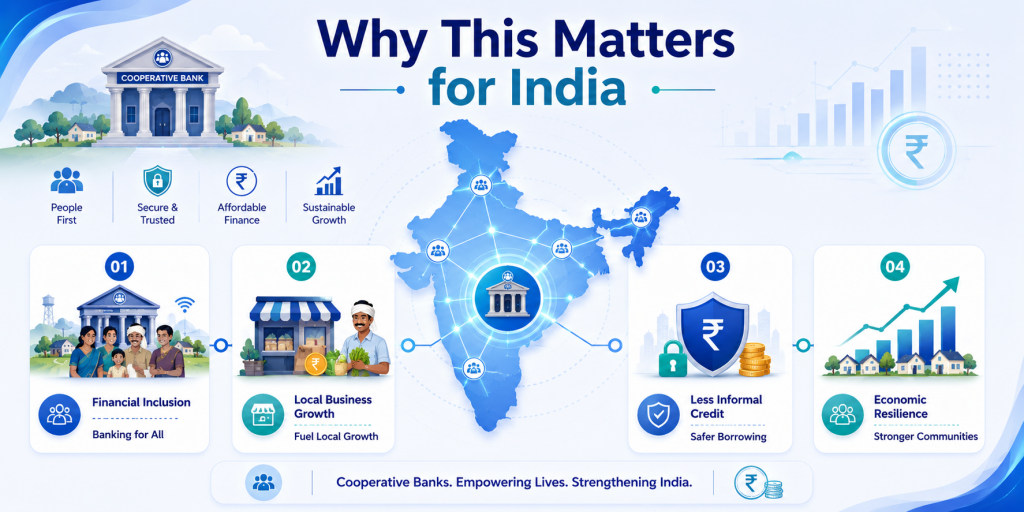
India’s cooperative banking sector serves hundreds of millions of people who remain beyond the practical reach of large private banks. By innovating with purpose, cooperative banks are:
- Driving financial inclusion in rural and semi-urban India
- Funding small businesses, farmers, and women-led enterprises
- Reducing reliance on informal moneylenders and exploitative credit
- Building local economic resilience from the ground up
Innovation in cooperative banking is never technology for its own sake. It is about making financial services more human, more accessible, and more impactful — for every member, in every corner of the country. That is what working for the nation truly looks like.
FAQs
Q1. What is the difference between a cooperative bank and a commercial bank?
Cooperative banks are owned and governed by their members, with a primary focus on community welfare. Commercial banks are shareholder-owned and profit-driven. Cooperative banks typically offer more accessible credit and tailored products for underserved communities.
Q2. Are cooperative banks safe to deposit money in?
Yes. Cooperative banks regulated by the RBI follow strict governance and audit norms. Additionally, deposits up to ₹5 lakh per depositor are protected under the DICGC insurance scheme.
Q3. What digital services do cooperative banks offer today?
Most cooperative banks now provide internet banking, mobile apps, UPI, IMPS, Aadhaar-based KYC, and digital loan applications — bringing them on par with many commercial bank offerings in terms of convenience.
Q4. How do cooperative banks support rural India?
They offer agricultural loans aligned with crop cycles, SHG credit linkages, micro-enterprise loans, and affordable savings products designed around the income patterns of farmers and rural workers.
Q5. What role does RBI play in cooperative banking?
The RBI regulates urban cooperative banks under the Banking Regulation Act, overseeing capital adequacy, governance standards, CBS adoption, and audit requirements to ensure long-term stability and depositor trust.
Cooperative banking is evolving fast and so should your digital strategy.
Partner with Cleuz to build a stronger online presence for your bank, reach more members, and grow with confidence.