
Personalisation vs Privacy: What Customers Expect From Brands Today
Customers want brands to know them. Yet they also want brands to back off. This tension, between personalisation and privacy is one of the defining challenges for any brand operating in 2026. Get the balance wrong in either direction and you lose trust. Get it right, however, and you build loyalty that no ad budget can buy.
The Expectation Paradox
Today’s customers are contradictory by nature and that’s completely rational. They want product recommendations that feel handpicked, emails that don’t waste their time, and experiences that feel genuinely human. But the moment a brand knows too much, it feels invasive. Creepy, even.
This is the personalisation paradox: people want relevance without surveillance. And in 2026, they’re increasingly willing to walk away from brands that can’t figure out the difference.
What Customers Actually Expect in 2026
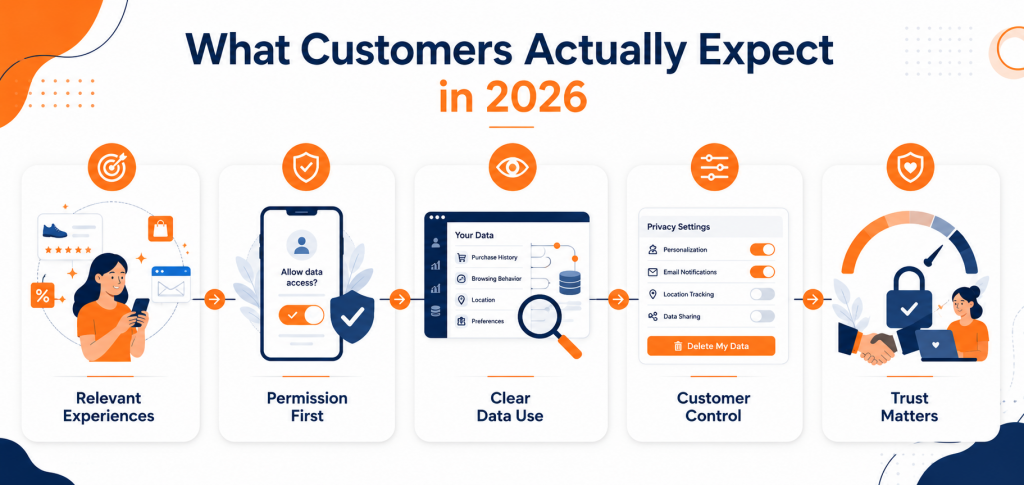
The rules have shifted significantly. Here’s where most customers now stand:
- Relevance is expected, not impressive. Generic communication is an instant turn-off in a world of intelligent, AI-driven experiences.
- Consent is non-negotiable. Customers want to know what data is collected, how it’s stored, and exactly why it’s being used.
- Transparency, moreover, builds more trust than personalization alone. Being honest about data use matters more than a perfectly timed push notification.
- Control is the new currency. The ability to opt out, edit preferences, or delete data makes customers feel safe, not suspicious.
- Even one bad experience breaks it all. A single data misuse incident can permanently damage brand trust, sometimes beyond repair.
Where Brands Are Getting It Wrong
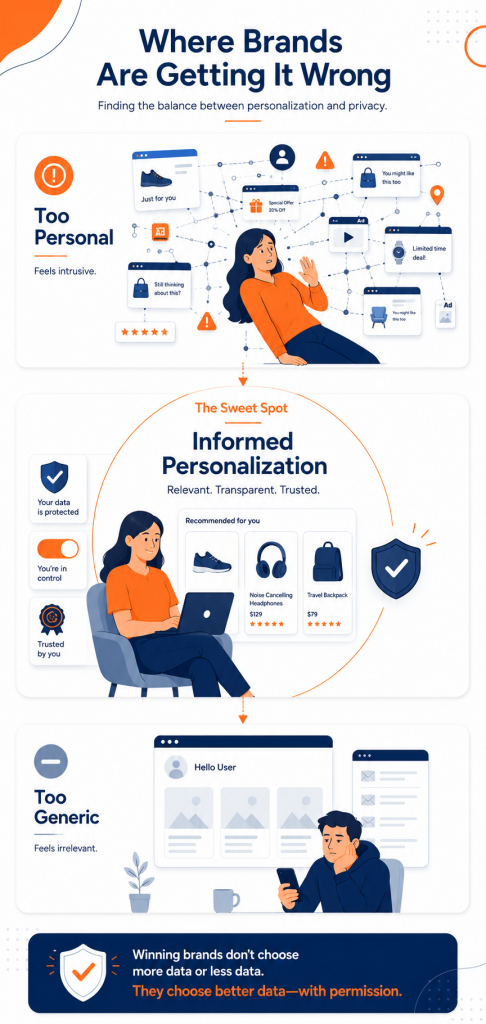
Most brands fall into one of two traps.
The first is over-personalizing — using behavioral data in ways that feel intrusive. Retargeting someone with an ad for something they searched once, weeks ago, feels less like helpfulness and more like surveillance. As a result, it doesn’t drive conversions. It drives resentment.
The second trap is under-delivering — hiding behind privacy concerns to avoid personalization altogether. Consequently, customers are left with irrelevant, impersonal experiences that feel like mass-produced noise. In a crowded digital space, that’s just as damaging.
Neither works. The sweet spot, instead, is informed personalization — relevance built on data the customer knowingly and willingly shared.
The Trust Equation: Personalization Done Right
| What Customers Dislike | What Customers Appreciate |
|---|---|
| Ads that follow them across platforms | Recommendations based on stated preferences |
| No clarity on how data is used | Clear, simple privacy policies |
| Inability to opt out or edit data | Easy-to-use preference controls |
| Third-party data without consent | First-party data used transparently |
| Feeling tracked without permission | Feeling understood without being watched |
Ultimately, the difference between “this brand gets me” and “this brand is watching me” comes down to consent and communication, a gap entirely within a brand’s control.
What Forward-Thinking Brands Are Doing
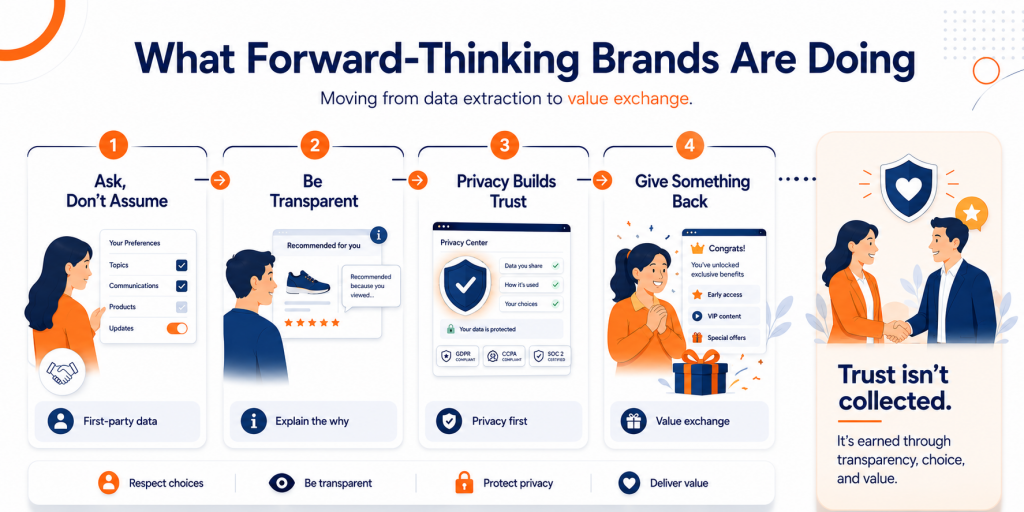
Smart brands in 2026 are shifting from data extraction to value exchange. Rather than collecting everything they can, they’re asking: what data do we actually need, and what are we giving customers in return?
A few principles that are working right now:
1.Lead with first-party data. Surveys, preference centres, and account settings provide data customers willingly share — always more powerful and ethical than data quietly inferred or purchased.
2. Explain the “why” behind personalization. “We’re showing you this because you browsed X” is far more reassuring than a mysteriously accurate recommendation with no context attached.
3. Make privacy a feature, not a disclaimer. Brands that treat data protection as a genuine selling point, rather than a buried legal footnote — consistently win customer confidence and long-term loyalty.
4. Finally, reward data sharing with real value. Exclusive content, better experiences, early access — give customers a tangible reason to share their preferences willingly.
FAQs
Q1. What is the personalization vs privacy debate?
It’s the tension between customers wanting relevant experiences and wanting control over their personal data.
Q2. Do customers prefer personalization or privacy?
Most want both. Relevance based on data they’ve consciously shared, with full control over how it’s used.
Q3. What is first-party data?
Data customers share directly with a brand, through forms, preferences, or account activity — as opposed to third-party tracking.
Q4. How can brands build trust around data?
Through transparency, easy opt-outs, clear privacy policies, and meaningful value in exchange for data.
Q5. Is personalization still effective in 2026?
Yes, but only when it’s consent-driven and contextually relevant. Intrusive personalization now actively damages brand perception.
The brands winning today aren’t the ones with the most data. They’re the ones customers trust with it.
At Cleuz, we help brands build digital strategies that are smart, human, and trustworthy — from content to customer experience. Let’s build something better.